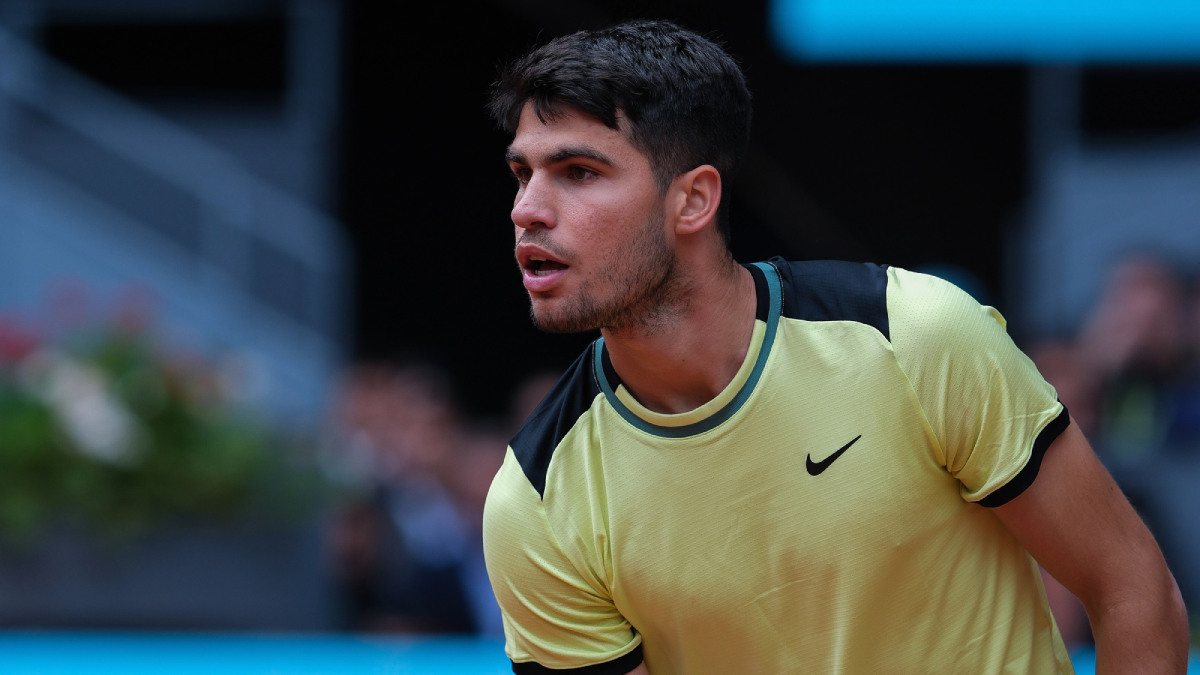
When Rafael Jódar stood across the net from Kei Nishikori in the capital of the United States, the contrast in professional lifespans was stark. Nishikori, an enduring veteran on a farewell tour, stood opposite a teenager whose meteoric ascent had until now been mapped entirely on clay. But tennis does not award legacy points for past finals, and Jódar dismantled the former world No. 4 6–3, 6–2 in just over an hour. It was an exhibition of cold efficiency: Jódar won 70 percent of his points on first serve, converted every break opportunity presented to him, and saved all three break points he faced.
Yet that baseline dominance was merely a prelude to a far more volatile examination of nerve. In the quarterfinals, Italy's Lorenzo Musetti—then ranked 15th in the world—handed the Madrid native a stark opening-set reality check.
The Musetti Turnaround: Anatomy of a Three-Set Swing
The first set vanished in a blur of unforced pressure. Jódar found himself unraveling in the fourth game, saving three break points before double-faulting on the sixth to drop his serve. Musetti compounded the damage with a break to love, coasting to a 6–1 set victory that left observers questioning whether the young Spaniard's transition to hard courts had hit a concrete wall.
Then came the tactical reset. Guided from the sidelines by his father and coach, Jódar completely shifted the geometrical distribution of the rallies. Musetti’s delivery began to fracture under the sudden weight of deep returns; the Italian landed only 44 percent of his first serves in the second set and committed six double faults over the course of the match. Jódar seized on those lapses, punishing second serves and racing through the second frame by an identical 6–1 scoreline.
The decider demanded a different brand of grit. Locked at 2–2, Jódar manufactured a decisive break in the fifth game, consolidating it with clean, uncompromising service games before sealing the 1–6, 6–4, 6–1 triumph in one hour and 59 minutes.
“Tengo que aprender muchas cosas en el circuito, todavía hay torneos que ni conozco ni he descubierto”, Jódar reflected after securing the victory, acknowledging the speed of his evolution (I still have many things to learn on the circuit, there are still tournaments I don't know or haven't discovered yet
). Están viniendo todas las cosas muy rápido, pero es mi primer año y queda mucha progresión.
Surface Evolution and Historical Footprint
To understand the weight of Jódar's run at the Mubadala DC Open, one must look at the calendar and the clay. Prior to arriving in Washington, all six of the Spaniard's ATP quarterfinal appearances since April had occurred on dirt—highlighted by his title run at Marrakech and a semifinal showing in Barcelona. Translating that momentum to hard courts carried a heavy question mark, even for a player seasoned by American collegiate conditions in the NCAA.
By reaching the final four, Jódar etched his name into the tournament's modern history books:
- Youngest Washington quarterfinalist since Alex de Miñaur in 2018.
- Youngest Spanish quarterfinalist in the tournament this century, joining a sparse historical ledger featuring Alex Corretja (2002), Fernando Verdasco (2010, 2011), and Alejandro Davidovich Fokina (2025).
- First hard-court semifinalist berth of his career.
More tangibly, the victory guarantees a monumental rankings milestone. Exactly a year prior, on August 4, 2025, Jódar sat at world No. 540. With his run to the Washington semifinals, the live projections ensure he will crack the top 20 for the first time, landing at world No. 19 when the official rankings refresh.
Semifinal Outlook: The Tabilo Test
The reward for dispatching Musetti is a quick turnaround for a 2:00 AM clash against 29-year-old Chilean Alejandro Tabilo, who advanced past Ben Shelton. Tabilo holds a 1-0 head-to-head advantage over Jódar, having won their previous meeting in straight sets during the opening round of Indian Wells.
Jódar remains grounded despite the accolades, noting that while the ranking jump is a welcome checkpoint, his focus remains entirely locked on the competition. Having already proven he can dismantle legends like Nishikori and grind down top-20 mainstays like Musetti, the 19-year-old enters the final weekend of Washington not as an overachieving surprise, but as an established threat for the upcoming US Open swing.
Sources
These sources formed the evidence pack for this article. Links open the original publisher; inclusion does not imply endorsement.
- puntodebreak.com original
- lereportersablais.com original
- marketing original
- mundodeportivo.com original
- Antoine Touchard original
- Juste Houngla original
- particle.news original