Scores, fixtures and picks
These fixtures are connected to teams or competitions named in the article. Live status and scores come from the normalized SportyPulses data feed; predictions are reader picks, not betting advice.
When Wayne Gretzky famously evaluated the greatest netminders in hockey history during a 2003 retrospective, his verdict was unambiguous: Grant Fuhr stood above everyone else. Selected eighth overall by the Edmonton Oilers in the 1981 NHL Entry Draft out of the Western Hockey League’s Victoria Cougars, Fuhr transformed from a teenage prodigy into the defensive foundation of the 1980s Edmonton dynasty. His arrival in Alberta immediately followed a championship season with Victoria that included a trip to the 1981 Memorial Cup, setting the stage for a ten-season Edmonton run defined by elite athleticism, heavy workloads, and unmatched performance under extreme pressure.
Crease Deployment, Inverse Angles, and Catch-Hand Disruption
From a tactical standpoint, Fuhr’s style combined classical stand-up goaltending with deep crease positioning, forcing opposing goalies and shooters into distinct spatial dynamics. While staying relatively deep in his net exposed the upper corners and occasionally left him vulnerable to five-hole attempts, his elite reflexes, lateral agility, and glove-hand speed regularly negated high-danger scoring opportunities. Scouted as perhaps the most mentally composed goaltender of his generation, Fuhr relied on precise angle play and explosive recovery mechanics rather than modern butterfly blocking systems.
A critical variable in Fuhr’s technical profile was his full-right setup—catching with his right hand rather than the standard left. As rival forward Brendan Shanahan once noted, the overwhelming majority of NHL goalies catch left-handed, conditioning shooters to rely on specific go-to moves and shot placements. Facing a full-right goaltender threw entire offensive units off balance, neutralizing standard shooter tendencies.
blockquote>"Shooters spend their whole life shooting against goalies, and 99 percent of them catch lefthanded. A lot of our favourite shots or go-to moves are not there with a goalie that catches the other way. It's like if 99 percent of the pitchers in the majors were righties and maybe five teams had lefties... It can throw a whole team out of whack."
Brendan ShanahanTeam captain Mark Messier similarly highlighted Fuhr’s ability to turn games through pure reflex, noting that despite minor positional vulnerabilities, Fuhr consistently delivered big saves in critical moments. Calgary Flames general manager Al Coates famously recounted an instance where defenseman Al MacInnis launched a point-blank, 20-foot rocket directly under the crossbar during a playoff match in Edmonton, only for Fuhr to snare the puck out of mid-air to deny a celebrated goal.
The Edmonton Dynasty and High-Workload Peak
Throughout his decade with the Oilers from 1981 to 1991, Fuhr formed elite goaltending duos, sharing the crease first with Andy Moog and later with Bill Ranford. Fuhr served as Edmonton’s primary playoff starter during four Stanley Cup championship runs between 1983–84 and 1987–88. While he earned a fifth Stanley Cup ring with Edmonton in 1990, an injury sidelined him during those playoffs, leaving Ranford to take the net.
Fuhr’s individual masterpiece occurred during the 1987–88 season. After backstopping Team Canada to a tournament victory at the 1987 Canada Cup by playing all nine games—highlighted by a grueling three-game final against the Soviet Union—Fuhr returned to Edmonton to endure an extraordinary NHL workload. He appeared in 75 regular-season games and 19 playoff contests that year. His performance earned him the Vezina Trophy as the NHL’s top goaltender and a second-place finish in Hart Memorial Trophy voting as league MVP, placing behind Mario Lemieux and ahead of teammate Wayne Gretzky.
| 1987–88 | Named NHL's top goaltender; 2nd in Hart Trophy voting. |
| 1993–94 | Co-winner with Dominik Hasek (Buffalo Sabres). |
| 1984, 1985, 1986, 1988, 1989 | Selected five times during Edmonton tenure. |
| 2003 | Inducted November 2, 2003. |
| October 22, 1999 | Earned with Calgary Flames vs. Florida Panthers. |
Historical Discrepancies and Off-Ice Turbulence
Historical records present differing details regarding Fuhr’s early biographical background. Primary hockey biographical records document that Fuhr was born on September 28, 1962, to one Black parent and one white parent, and was adopted as an infant by a white family who raised him in Spruce Grove, Alberta. Conversely, secondary regional profiles state that he was born to a mother in the Enoch Cree Nation in Alberta before being adopted by Betty Wheeler and Robert Fuhr, playing youth hockey with the Enoch Tomahawks in the 1970s.
Fuhr’s career was also marked by notable off-ice challenges and public controversies. In 1990, after a two-week stay at a Florida counseling center, Fuhr publicly acknowledged using a prohibited substance across a seven-year period during Edmonton’s championship era. Statements released by his ex-wife, Corrine Fuhr, detailed ongoing substance issues, prompting NHL President John Ziegler to issue a one-year suspension in September 1990, deeming Fuhr's conduct "dishonorable and against the welfare of the league." The suspension was ultimately reduced to 59 games for the 1990–91 season, though opposing crowds frequently taunted Fuhr with bags of sugar upon his return to the ice.
In May 1993, while playing for the Buffalo Sabres, Fuhr faced a high-profile incident when his membership application to the nearby Transit Valley Country Club was rejected. With several white Sabres teammates already granted membership, public speculation cited racial bias. Club officials countered that the application contained incomplete information. Following public backlash and act of vandalism—including a swastika burned onto one of the golf greens—the club reversed its decision, offered Fuhr an apology, suspended its membership committee, and embedded an anti-bias policy into its bylaws. Fuhr rejected the club’s offer and instead joined the Lancaster Country Club.
Crease Transitions: Toronto, Buffalo, St. Louis, and Calgary
Edmonton traded Fuhr to the Toronto Maple Leafs in 1991 as part of a massive seven-player deal. After a season and a half in Toronto, he was traded to the Buffalo Sabres in 1993. In Buffalo, Fuhr played a vital role in a dramatic first-round playoff victory over the Boston Bruins and helped mentor a young Dominik Hasek. During the 1993–94 season, Fuhr split time with Hasek to capture the William M. Jennings Trophy for allowing the fewest goals in the league. However, after Fuhr suffered multiple injuries and spent a brief stint with the AHL's Rochester Americans, Hasek assumed the full-time starting role.
Following a brief late-career stop with the Los Angeles Kings in 1994–95 where he reunited with Gretzky, Fuhr experienced a major career resurgence after signing as a free agent with the St. Louis Blues prior to the 1995–96 season. Known for his durability, Fuhr set St. Louis franchise records by playing 79 games that season, including 76 consecutive starts. His 1996 postseason ended abruptly in the first round when Toronto forward Nick Kypreos collided with him in the crease, tearing several knee ligaments and forcing backup Jon Casey to take over.
Despite undergoing extensive reconstructive knee surgery, Fuhr returned to cement himself alongside Mike Liut and Curtis Joseph as one of the three winningest goalies in Blues franchise history. After St. Louis signed Roman Turek in 1999, Fuhr was traded to the Calgary Flames. In Calgary, he served as a veteran mentor for young netminders like Fred Brathwaite and reached a major milestone on October 22, 1999, recording his 400th NHL victory against the Florida Panthers. Following a brief minor-league assignment with the Saint John Flames of the AHL, Fuhr officially retired prior to the 2000–01 season at age 37.
Post-Retirement Coaching and Honors
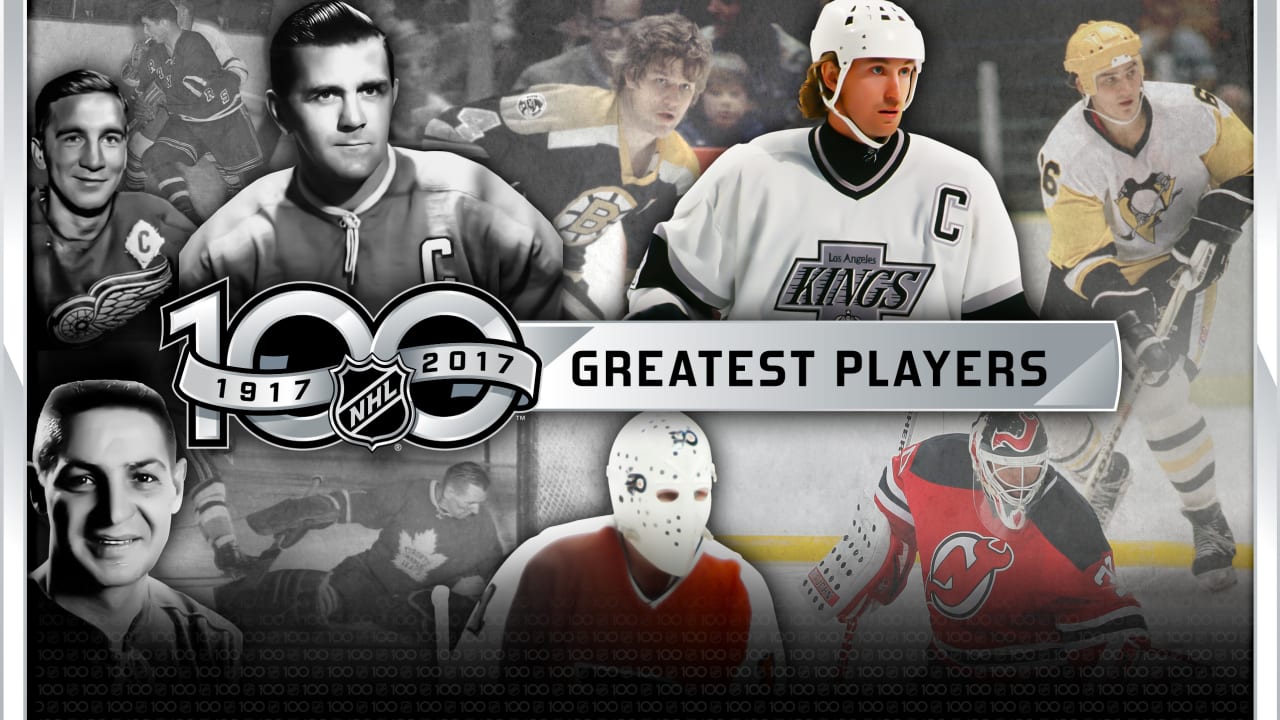
Following his playing career, Fuhr transitioned into coaching, serving as goaltending coach for the Calgary Flames during the 2000–01 and 2001–02 seasons, and later holding the same position with the Phoenix Coyotes from July 22, 2004, through the end of the 2008–09 season before being succeeded by Sean Burke. Fuhr was formally inducted into the Hockey Hall of Fame on November 2, 2003, entered the Alberta Sports Hall of Fame in 2004, and was selected as one of the 100 Greatest NHL Players during the league’s centennial celebration.
Sources
These sources formed the evidence pack for this article. Links open the original publisher; inclusion does not imply endorsement.
- nhlsnipers.com original
- jm-omargrant.blogspot.com original
- kdojeto.superia.cz original
- hockeygoalies.org original