Atmospheric Volatility and the Physiological Burden of Thermal Stress
Whether enduring severe atmospheric shifts or competing through intense summer heatwaves, elite physical performance is inextricably bound to the body's capacity for thermal regulation and systemic recovery. When environmental conditions deteriorate—shifting rapidly from 40°C shade temperatures to violent atmospheric drops, or holding relentless tropical humidity—the human body undergoes elevated stress that directly impacts physical output, sleep architecture, and metabolic recovery.
The physical strain caused by rapid environmental fluctuation is illustrated dramatically by microclimate phenomena like the bora near the Caucasus mountains and Novorossiysk. In these zones, vertical air masses plunge hundreds of meters, pushing wind speeds to 50 meters per second and causing local temperatures to plummet by 30 degrees Celsius in moments—turning a summer day into winter conditions, kicking up dense dust, and subjecting the body to immediate physical shock. Understanding how living organisms navigate such violent environmental stresses requires looking closely at core thermoregulation, microclimate adaptation, and targeted recovery protocols.
Thermoregulation Mechanics: Core Temperature Drops and Metabolic Recovery
At the center of physical recovery is the body's requirement to lower its core temperature. According to sleep specialist James Wilson, known as The Sleep Geek, Une baisse de la température centrale est l'un des changements les plus importants que subit notre corps pour nous préparer au sommeil.
Without this internal cooling mechanism, high physical exertion coupled with environmental heat creates persistent cellular strain, preventing restful recovery states.
Psychologist and sleep specialist Theresa Schnorbach of Emma Sleep highlights the daily physiological cycle: La température centrale de notre corps peut fluctuer tout au long de la journée [...]. Cependant, afin de se détendre pour aller se coucher et bénéficier d’une bonne nuit de sommeil, notre corps a également besoin de se refroidir un peu.
To manage thermal pressure, nutritional and biological adjustments play a crucial role:
- Hypothalamus Activation: Capsaicin, the active compound in chili peppers, stimulates the hypothalamus—the body's internal thermostat—triggering sweat production to accelerate cooling.
- Hydration and Cellular Repair: Nutritionist Jenny Tschiesche notes that
Les concombres sont composés d'environ 95% d'eau. Ils apportent de l'hydratation mais ont aussi de la fisétine anti-inflammatoire qui peut aider à réduire les poches, les rougeurs et l'irritabilité.
- Thermogenesis Avoidance: Consuming caffeine shortly before rest stimulates thermogenesis, artificially raising body heat and disrupting core cooling processes.
Targeted Thermal Interventions and Microclimate Controls
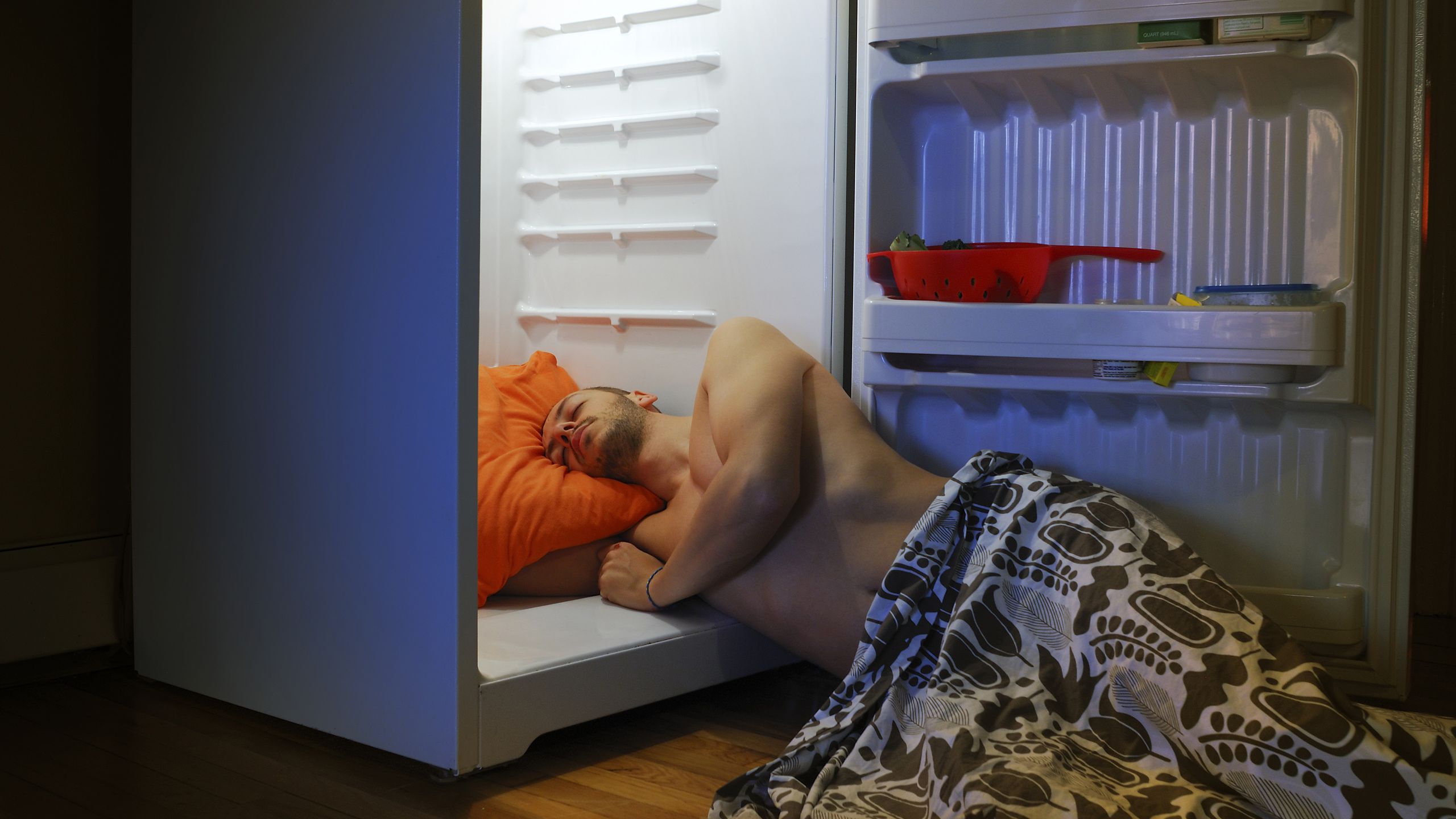
When ambient heat lingers late into the evening, active physical cooling strategies become necessary to shed excess heat from high-exertion activity. A counter-intuitive but highly effective method involves taking a lukewarm bath or shower before rest. Theresa Schnorbach explains that warm water encourages peripheral blood vessels to dilate, allowing excess internal body heat to dissipate rapidly into the surrounding air.
For targeted cooling, applying ice packs wrapped in cloth—or a wet washcloth—to key pulse points where blood flows closest to the skin surface (such as the wrists, sides of the neck, and underarms) provides immediate core temperature drops. Direct skin contact with uninsulated ice packs should always be avoided to prevent tissue damage.
| Material Type | Moisture Regulation | Breathability & Thermal Retainability |
|---|---|---|
| Bamboo Fibers | High absorption and superior moisture-wicking capacity. | Highly breathable, preventing localized heat trapping. |
| High-Thread Cotton | Absorbs moisture well but wicks poorly. | Reduced breathability as thread count increases. |
| Polyester | Low absorption compared to natural fibers. | Lightweight and breathable sleep environment. |
| Memory Foam | Minimal moisture wicking. | Retains body heat; inferior to natural pocket spring fills. |
Microclimate management in living spaces also demands intentional airflow engineering. Creating cross-ventilation by opening windows on opposing sides of a building, closing blinds or shutters against direct sunlight during peak daytime hours, and placing a bowl of ice or cold water directly in front of an electric fan creates an artificial cool-air stream across the room.
Biological Sensitivity Across Species: Stress and Environmental Management
The impact of thermal stress and environmental disturbance is not unique to humans; small, highly sensitive mammals demonstrate parallel vulnerabilities that underscore fundamental biological limits. Dwarf Angora rabbits—which reach their full adult size of under 20 centimeters and 1.0 to 1.5 kilograms by six months—require strict environmental controls to survive hot summer periods.
Because dwarf Angora coats are extremely dense, failure to manage summer overheating can cause severe physiological distress. While larger coats can be trimmed or carefully combed using specialized tools like Foolee brushes—which remove over 90% of dead hair without injuring delicate skin—or managed with thinning scissors to break up matted fur, environmental safeguards remain primary. Cages must be placed in well-ventilated spaces protected from cold drafts and away from high-traffic domestic areas to minimize environmental stress.
Recovery Consistency Amid Environmental Disturbance
Whether managing human athletes recovering from extreme weather exposure or maintaining delicate biological routines, consistency remains the single most important factor. Expert sleep science dictates maintaining a strict, unchanging wake-up time regardless of delayed sleep onset caused by heat or environmental disturbance. By protecting the body's circadian pressure and applying verified thermal management techniques, high physical performance can be sustained even when environmental conditions push physical limits to the edge.
Sources
These sources formed the evidence pack for this article. Links open the original publisher; inclusion does not imply endorsement.
- czechlit.cz original
- global.techradar.com original
- animauxinfo.com original