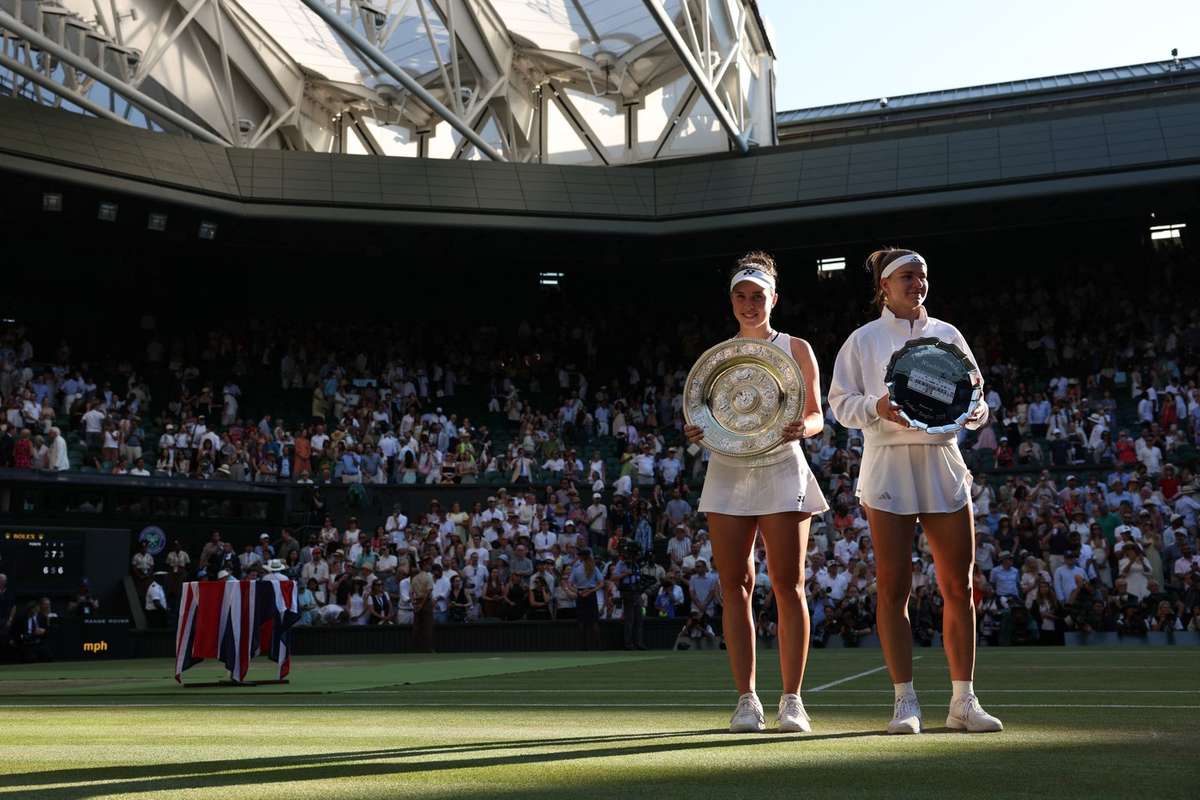
When a women's final at Wimbledon features two players from the same Central European nation, the global tennis community inevitably asks the same persistent question: Where does the magic come from? How does a country with a population a fraction the size of the United States continuously manufacture elite contenders?
The answer is neither a corporate marketing strategy nor a sudden influx of casual wealth. According to Czech youth coach Ondrej Dohnal, who has previously helped develop players such as Katerina Siniakova, success cannot be bought through nostalgia or talking about former champions. Instead, it is anchored in a pervasive local ecosystem.
As tennis legend Martina Navratilova explained when asked by the BBC about the phenomenon, In the Czech Republic, there are clubs everywhere; every small town has two, three or four clay courts, and there are now far more good coaches.
That density of infrastructure creates an accessibility that larger sports federations often struggle to replicate despite having budgets a hundred times larger. Yet physical courts alone do not generate Grand Slam finalists like Linda Noskova, Karolina Muchova, Barbora Krejcikova, Marketa Vondrousova, or Petra Kvitova. The core mechanics of the system rely on specific human and developmental pillars:
- Universal Court Access: Almost every small village features playable clay courts, lowering the geographical barrier to entry for young girls.
- Foundational Coaching: Affordable, technically rigorous instruction emphasizes correct mechanics from a young age rather than relying solely on high-priced modern training academies.
- Cultural Values: A shared baseline of humility, hard work, and relentless personal ambition unites generations of players, from veterans to emerging juniors.
Dohnal points out the paradox of international funding versus human capital. While tennis powerhouses in Britain, France, or Australia pump substantial financial resources into youth development and wildcard exchanges, they frequently run up against a shortage of dedicated grassroots instructors. By contrast, the Czech system relies heavily on coaches who often work for modest wages out of pure devotion to the sport.
However, that foundational strength faces a quiet vulnerability. As Dohnal warns, the invisible coaches working for minimal hourly rates—earning roughly 500 Czech crowns or less—are doing jobs worth far more than their current compensation and are gradually starting to disappear. If human resources form the jewel in the crown of Czech tennis, the sustainability of that labor pool remains the central variable for the future.
Beyond the training grounds, the mental fortitude forged within this environment manifests clearly on the game's biggest stages. When Karolina Muchova delivered a poignant runner-up speech at Wimbledon—vowing to return stronger and claim the trophy—it reflected the exact blend of ambition and resilience that defines the nation's tennis DNA. With two players safely lodged in the world's top 10 and eight inside the top 50, the Czech Republic's localized factory shows no signs of slowing down, even as it navigates the economic realities of grassroots coaching.
Sources
These sources formed the evidence pack for this article. Links open the original publisher; inclusion does not imply endorsement.
- munispace.muni.cz original
- livesports.co original
- flashscore.com original