When international cricket takes root in new territory, initial match data often reveals structural quirks before pitches fully settle. At Korogi Sports Park in Nisshin, Aichi Prefecture, the ground's early T20 record shows a notable contrast between setting a score and chasing one down. Developed on the outskirts of Nagoya from a former baseball facility to provide a permanent home for Japanese cricket and serve as a venue for the 2026 Asian Games, the ground has already established an informative initial profile. Across the six T20 matches recorded on the deck, sides batting first have prevailed four times, leaving chasing teams with only two victories. The scoring differential across innings remains stark: first-innings totals average approximately 135 runs, whereas second-innings scores drop off to roughly 80.
Surface Physics and Initial Scoring Spread in Nisshin
Although the initial match sample at Korogi Sports Park remains compact and reflects associate-nation competition, the venue has delivered significant scoring variance. High-scoring exchanges have existed alongside total top-order breakdowns. In one match, the competing teams combined for 359 runs across both innings, while another fixture saw an entire batting line-up bowled out for just 47 runs. Chasing has proved particularly demanding in these early games as initial surface assistance and friction curtail late-game fluid scoring.
| Venue Metric | Recorded Statistic / Detail |
|---|---|
| Total T20 Match Sample | 6 matches |
| Matches Won Batting First | 4 |
| Matches Won Chasing | 2 |
| Average First-Innings Score | ~135 runs |
| Average Second-Innings Score | ~80 runs |
| Highest Match Aggregate | 359 runs (two combined innings) |
| Lowest Completed Score | 47 all out |
| Shortest Boundary Length | 65 metres |
The ground's pitch square features four traditional turf strips alongside a specialized hybrid pitch made with local clay and synthetic fibres. This hybrid surface provides a distinct blend of bounce and grip. Fast bowlers extract noticeable carry from the deck early on, while spinners become increasingly potent as match play continues and the synthetic-clay deck grips the ball. Batter judgment is further tested by a compact 65-metre shortest boundary, requiring precise placement and power.
Environmental conditions in Nisshin present an additional strategic variable. September tournament windows feature warm, humid conditions with temperatures generally ranging between 24°C and 31°C. Late-summer weather in the region also carries the potential for rain showers and typhoon activity, introducing match delays that can abruptly alter pitch conditions.
Macro Run-Chasing Trends Across T20 Benchmarks and Test History
Early low second-innings figures at emerging grounds frequently reflect a temporary phase before pitch preparation adapts and batters adjust. The Sawai Mansingh Stadium in Jaipur—a home base for the Rajasthan Royals in IPL 2026—graduated from low-scoring contests into an arena capable of delivering 200-plus run chases in recent IPL seasons as teams adjusted to venue conditions.
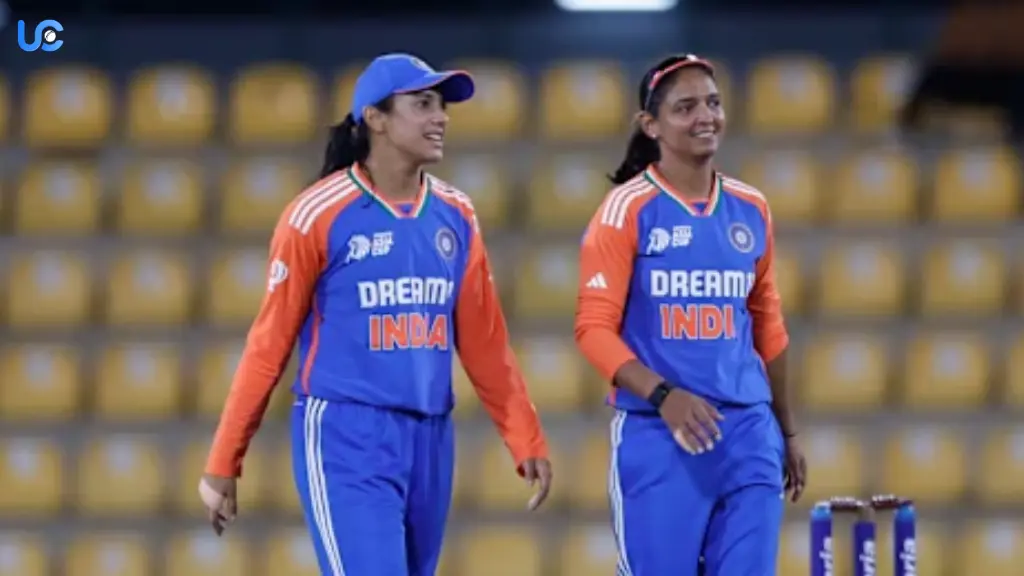
In global T20Is, aggressive run-chasing standards are set by elite international scorers. New Zealand's Suzie Bates heads the all-time women's T20I run list with 4,716 runs in 174 innings at a strike rate near 108, accumulating 4,435 of those runs as an opener alongside one century and 28 fifties. India's Smriti Mandhana sits second with 4,022 runs and 31 fifties, while captain Harmanpreet Kaur has tallied 3,700 runs, punctuated by her 103 in the 2018 T20 World Cup semi-final. Potent strokeplay from Sri Lanka's Chamari Athapaththu (three T20I centuries, including 119*), Sophie Devine (3,431 runs, 114 sixes, joint-fastest 18-ball fifty), Beth Mooney (42.26 average), Meg Lanning (133*), Richa Ghosh (142.40 strike rate), and Esha Oza (779 runs in calendar year 2025) demonstrates how modern top orders sustain tempo during steep chases.
Even in Test cricket, where deteriorating pitches complicate late chases, fourth-innings capabilities have expanded. Seven of the ten highest successful fourth-innings chases in Test history have occurred in the 21st century, led by West Indies chasing down 418 against Australia in 2003 (finishing on 418/7 behind centuries from Ramnaresh Sarwan and Shivnarine Chanderpaul). Highlighting individual excellence in difficult fourth-innings scenarios, Kyle Mayers scored an unbeaten 210 for the West Indies against Bangladesh in 2021, standing as a premier individual fourth-innings score recorded during a successful major chase.
Sources
These sources formed the evidence pack for this article. Links open the original publisher; inclusion does not imply endorsement.
- uccricket.live original
- sportstiger.com original
- statista.com original
- sports.yahoo.com original