The transfer market between Italy and Spain in women's rink hockey has, for years, run on whispers rather than headlines. Cristina Santochirico's move from HC Valdagno to Bembibre Hockey Club, announced in late July, is the kind of cross-border step that reminds both circuits how porous their borders have quietly become.
For Bembibre, a club rooted in the mining hills of El Bierzo in the province of León, the signing lands at a precise moment. The team is preparing its fourth consecutive season in Spain's OK Liga Iberdrola and, for the first time in its history, a European WSE Cup Women campaign to run alongside it. For an outfit that finished eighth in 2025/26 and only just consolidated its elite status, the Italian winger is more than a roster addition. She is a statement that the project is ready to operate on two fronts.
A wing forged in men's youth teams
What Santochirico brings, on paper, is the profile of a wide player whose development took the most physically unforgiving path European rink hockey offers: boys' teams. According to her Italian federation (FISR) player profile, she was born in Matera on 19 June 2002, came up at the local Pattinomania club, and then spent her youth moving through male age-group sides, even sampling senior B-team minutes.
Playing with the boys, for us girls, is hard: you need a lot of sacrifice to stay at the same pace.Cristina Santochirico, FISR player profile (translation from Italian)
That background matters when the calendar turns to the WSE Cup. Rink hockey wings operate in tight, board-bound corridors where the difference between elite and amateur is measured in centimetres of separation and half-seconds of decision. A player raised on the pace and contact of mixed-gender youth hockey tends to read pressure earlier and absorb body contact that would freeze a more sheltered product. Whether Bembibre's coaching staff can convert that conditioning into Spanish-league output is a separate question, one the autumn fixtures will answer.
The road from Matera to Vicenza
In 2020, Santochirico followed a familiar Italian hockey migration south to north, leaving Basilicata for Veneto. There she joined Montebello's under-19 setup and the senior squad of HC Valdagno, where she has played her club hockey since. The landing was productive. In 2020/21, she was part of the Valdagno side that won the Italian Cup, and earlier, as a teenager, she had been a Campionessa d'Italia with HP Matera in 2017/18.
Her international record is short, deep, and not without silver. With Italy she finished fourth at the 2019 World Roller Games in Barcelona and took a European bronze in Luso, Portugal, in 2021. The trajectory of the senior Italian women's national side has not always travelled upward since, but the Barcelona exposure in particular gave her a baseline for what elite international hockey looks like at full speed, useful context for a player about to step into a second foreign league.
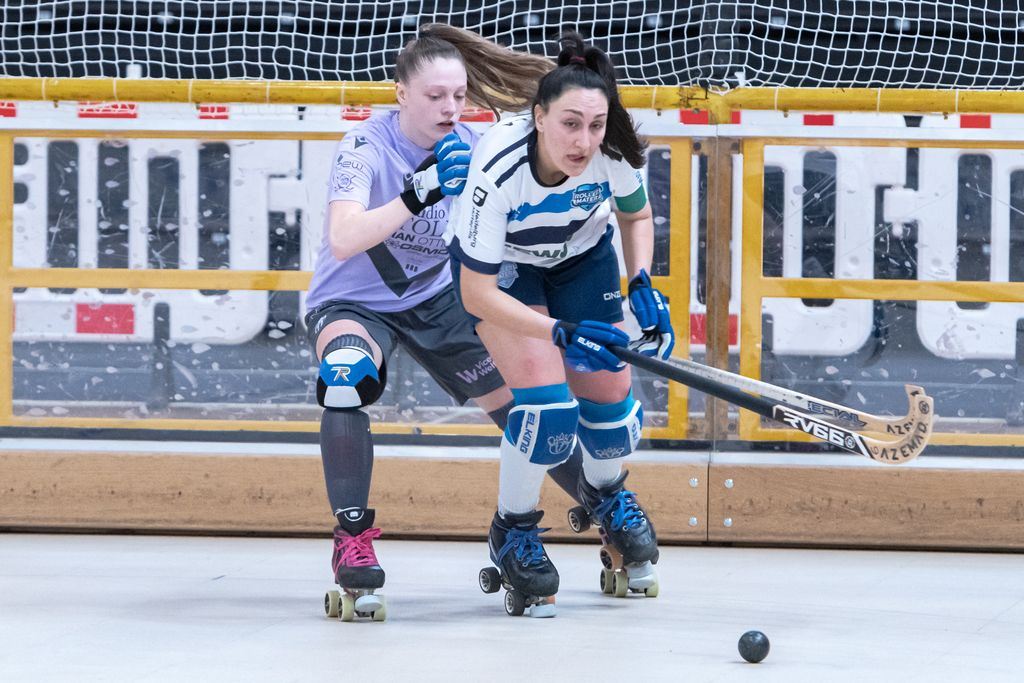
Her last confirmed domestic outing in the source pack is the 2025/26 Coppa Italia Femminile final on 8 March 2026 at the PalaDante in Trissino, where Valdagno fell 8-3 to Roller Matera. The result underlines the gap Santochirico is leaving behind. Matera, now four-time consecutive Coppa Italia winners after a second trophy of the season in October's Supercoppa Italiana, looked a cut above, with Lapolla, the Lamacchia sisters, Taccardi and Orsato sharing the goals. Valdagno, by contrast, leaned on a narrower attack through Rossetto and Ghirardello and could not stay with the Lucane after the early exchanges.
Into the Águilas' nest
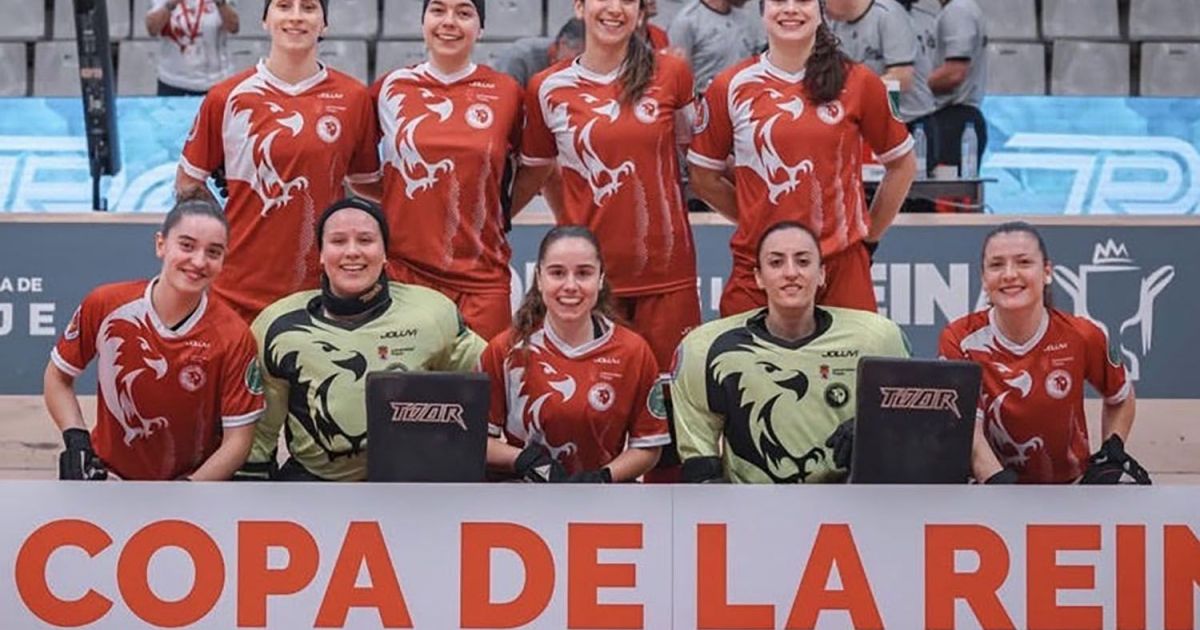
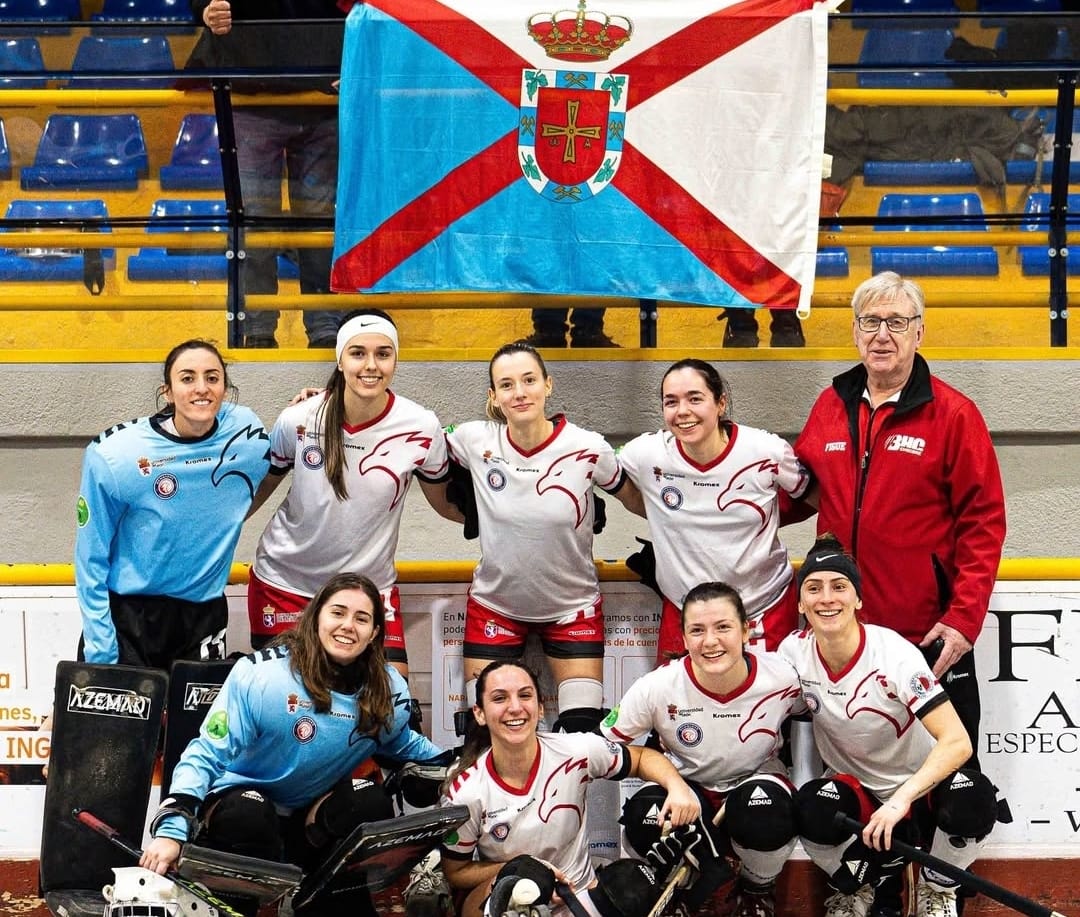
Bembibre's situation is, in many ways, the inverse of the one she has just left. Las Águilas are not chasing a fifth straight domestic cup. They are trying to consolidate elite status they have only just earned and to survive a debut European campaign without the cushion of a deep domestic rotation.
According to regional reporting from La Nueva Crónica and Infobierzo, the spine of that project is already in place. Chilean international goalkeeper Fernanda Tapia, who arrived in 2023/24 and was named February MVP of her first Bembibre season, has been confirmed for a fourth consecutive year. Captain Gisela Vicente and veteran defender Bea Várzeas are continuing, alongside the young Spanish pair Txell Gimeno and Laura Porta. The 2025 intake of Joana Xicota and Carla Castro added physical presence through the middle of the rink, and youth graduate Flo Triviño, an Italy-Chile dual-national promoted from the Bembibre junior set-up in 2025, is expected to provide back-up between the posts.
What the roster has been missing, on the evidence of the past two windows, is a touch of European variety, an attacker who can bend a defensive line by going wide and refusing to come inside. That is the slot Santochirico, an outside wing by Italian federation registration, is being asked to fill. How she is actually deployed, as a pure wide outlet, a second-wave finisher off Tapia's long restarts, or a rotational piece to relieve the Spanish internationals during WSE Cup double-header weekends, will be a function of how head coach Carlos Figueroa chooses to compress his match minutes in a season with two competitions.
Two calendars, one project
The timing of the move is what gives it weight. Bembibre has publicly committed to the WSE Cup Women, a tournament that, according to Infobierzo, will bring opponents from Germany, Portugal, France, England and Switzerland into the Bembibre Arena. The club is already working on the financial scaffolding required to compete on two fronts. The first continental tie, in other words, will not be a celebration lap. It will be a logistical and tactical test, and a thin squad in late August can quickly become a thin squad in February.
For Santochirico, the calculus is straightforward. She arrives at a club with a defined goalkeeper hierarchy, a clear captain, and a European fixture list that will demand squad rotation. The risk is real, including a new league, a new refereeing culture, and a Spanish rink hockey scene that has historically not been the most welcoming to foreign imports. The opportunity is more interesting still. She becomes, on paper, the first Italian woman to cross into the Iberian women's circuit at a moment when both sides of the exchange are watching each other more closely than they have in a generation.
It is a small transfer on the European sporting map. For the woman who grew up in the countryside outside Matera, learned the game from her older sister, and ended up playing senior B matches against grown men before she was old enough to drive, it is, in every other way, a long way from home.
Sources
These sources formed the evidence pack for this article. Links open the original publisher; inclusion does not imply endorsement.
- Redazione original
- Redacción Infobierzo original
- Raúl Fernández original
- bierzodiario.es original
- Redazione original
- fisr.it original
- El Bierzo Digital original