Related coverage
View the Instagram post
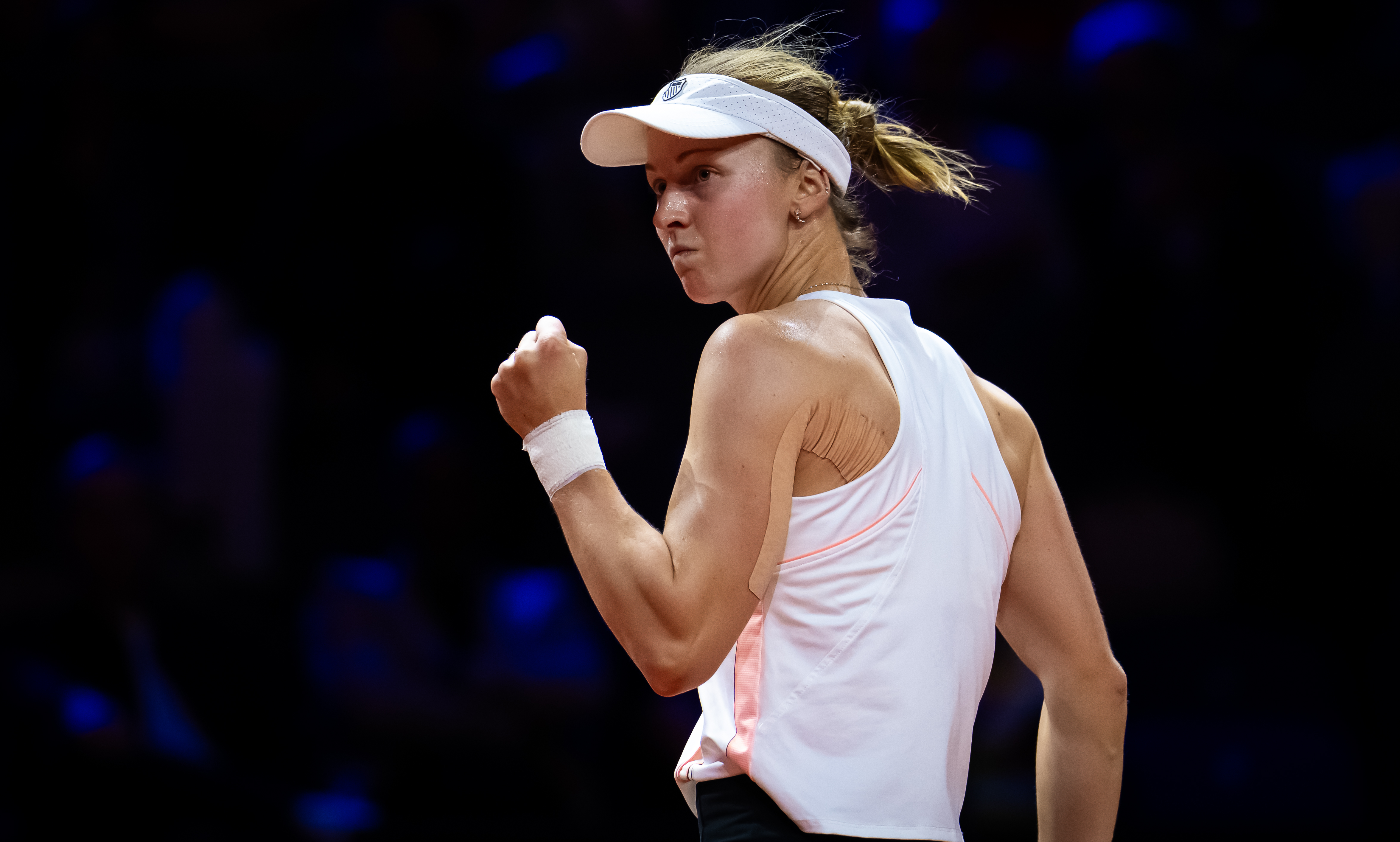
On the red clay of Court 8 at the Mutua Madrid Open, the tennis world saw a stark demonstration of how surface proficiency and service stability can override recent fluctuations in form. Liudmila Samsonova’s 6-2, 6-2 victory over Janice Tjen was not merely a win; it was a tactical dismantling that highlighted a massive statistical gulf between the two players when the pressure of a WTA 1000 event is applied.
While both players entered the Round of 64 grappling with difficult 2026 campaigns—both currently sitting at a 5-15 win-loss record for the year—the match revealed that Samsonova’s ceiling remains significantly higher. The result mirrored their previous encounter in Abu Dhabi earlier this year, where Samsonova secured a similarly decisive 6-2, 6-2 win on hard courts, proving that her baseline dominance is not strictly surface-dependent, even if her clay-court pedigree offers an additional layer of security.
The Statistical Chasm: Service and Return Efficiency
The primary engine behind Samsonova's dominance was her ability to dictate play through her serve. In a match where momentum is often dictated by the ability to hold service games under pressure, the numbers tell a story of total control. Samsonova’s first-serve win percentage sat at a staggering 83%, a figure that left Tjen with almost no opportunity to neutralize the Russian's power.
By contrast, Tjen’s service game struggled to find any rhythm on the Madrid clay. Her first-serve win percentage hovered around 53%, a vulnerability that Samsonova exploited with clinical efficiency. This disparity was further emphasized by the break point conversion rates. Samsonova demonstrated a superior ability to capitalize on opportunities, converting 41.51% of her break points, whereas Tjen’s conversion rate sat at a much more modest 28.93%.
Key Matchup Metrics:
| Metric | Liudmila Samsonova | Janice Tjen |
|---|---|---|
| First Serve Win % | 83% | 53% |
| Break Point Conversion | 41.51% | 28.93% |
| Second Serve Win % | 75% | 37% |
| Total Games Won | 12 | 4 |
Analysis: The gap in second-serve efficacy (75% for Samsonova vs 37% for Tjen) was perhaps the most decisive factor, preventing Tjen from ever mounting a sustained comeback.
Clay Court Pedigree: The Surface Factor
The Madrid surface acted as a natural separator. For Janice Tjen, the transition to clay has been a significant hurdle. Looking at her performance over the last twelve months, Tjen has struggled to find her footing on the dirt, recording a 0-1 record on clay and a meager 12.5% winning percentage on return games in recent clay outings. Her ability to win service games on the surface has been cited as a major weakness, sitting at just 28.6% in recent clay-specific data.

Samsonova, conversely, enters the clay season with a much more established foundation. Over the past year, she has navigated six clay tournaments with a 9-6 match record. Her ability to win 71.4% of her service games on clay provides the stability required to navigate the long rallies and tactical shifts inherent to the red dirt. While Tjen’s game relies heavily on the quickness and high first-serve percentages seen on hard courts, Samsonova’s ability to maintain a high volume of heavy responses allowed her to control the baseline exchanges from the opening game.
A Season of Struggles: Contextualizing the 2026 Slump
To understand why this result felt so decisive, one must look at the broader context of the 2026 season. Tjen, who enjoyed a spectacular 2025 with a 22-5 winning percentage, has found the current year significantly more challenging. Her drop to a 33.3% win rate in 2026 has been marked by inconsistency, particularly when facing opponents ranked in the Top 20.
Samsonova has shared much of this seasonal frustration, also posting a 33.3% win rate. However, the nature of her losses has often been against elite competition—such as her recent Round of 16 exit to World No. 3 Coco Gauff at the Porsche Tennis Grand Prix. The Madrid match served as a reminder that while both players are searching for form, Samsonova’s baseline of play remains fundamentally more robust against players outside the absolute elite.
As the tournament progresses, Tjen will need to address the glaring weakness in her second-serve stability if she hopes to climb back toward the ranking levels she occupied during her breakout year. For Samsonova, the task is to convert this high-level dominance into deep tournament runs as she looks to stabilize her season.
Sources
These sources formed the evidence pack for this article. Links open the original publisher; inclusion does not imply endorsement.
- protipster.it original
- sportsbookwire.usatoday.com original
- matchstat.com original
- Sofascore original
- Ryan Leaver original
- aiscore.com original
- betexplorer.com original