The 27th European Athletics Championships at Birmingham's Alexander Stadium have transformed the West Midlands into the epicenter of continental track and field. Beneath the scrutiny of packed morning sessions and electric night finales, the continent's finest competitors are navigating the fine line between early-season rust and peak championship execution. From the grueling discipline of the decathlon to the razor-thin margins of the sprints, the championship cadence demands absolute technical precision.
At the center of the multi-event spotlight is world champion Leo Neugebauer. Entering the second day as the decathlon leader, the German powerhouse has anchored his campaign with steady marks across the throwing circles and runway. Meanwhile, former world and European champion Niklas Kaul lurks inside the top six at the halfway mark, setting up a brutal test of endurance leading into the decisive 1,500-meter finale. Over in the women's steeplechase, Gesa Krause arrives in prime form as Europe's second-fastest performer this season. Alongside Lea Meyer and Olivia Gürth, the German trio forms a formidable tactical block aiming to neutralize the pace set by Britain's Elise Thorner.
The Throwing Rings and Sprint Straightaways
Technical events have delivered immediate drama, none more so than the shot put. Yemisi Mabry, who captured stunning Olympic gold in Paris under her maiden name Ogunleye, asserted her status in the qualifying rounds with a 19.25-meter heave. Yet, the gold-medal path must go through the Netherlands' world leader Jessica Schilder. In the men's shot put, Italian dominator Leonardo Fabbri underscored his favoritism by launching a 21.29-meter mark in qualifying, establishing a towering standard that the rest of the field must chase under the evening lights.
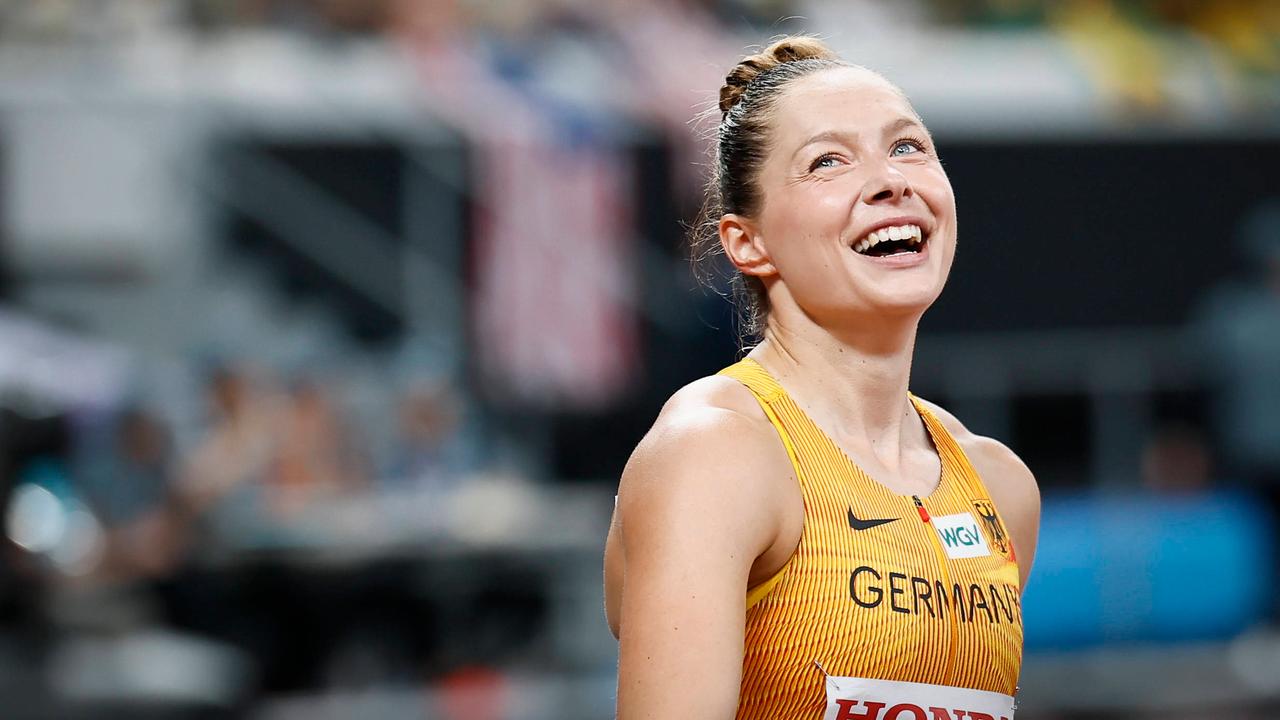
Sprint dynamics have proven equally volatile. Gina Lückenkemper arrived in Birmingham facing an uphill battle after a disjointed season complicated by a tick bite, ultimately missing the 100-meter final won on home soil by Britain's Amy Hunt. With compatriot Rebekka Haase also seeking rhythm following domestic championship hiccups, the German sprint contingent has had to rely on gritty resilience. In the half-lap event, Owen Ansah navigated his 200-meter semifinal heats under the watchful eye of officials amidst an ongoing eligibility cloud, proving that psychological fortitude is just as vital as raw speed.
Standings Pressure and Tactical Realities
The pacing of the seven-day schedule leaves no room for recovery. Distance specialists like Florian Bremm face an uphill tactical landscape in the absence of record-holder Mohamed Abdilaahi, forced to measure their efforts against elite company such as Norway's Jakob Ingebrigtsen, who entered the championships as a heavily scrutinized question mark after an absence of early-season appearances. Whether analyzing the precision of Simon Ehammer's long-jump series or the high-stakes qualifying rounds awaiting stars like Malaika Mihambo, the narrative of these European Championships is defined by adaptation.
As the competition barrels toward its weekend climax—featuring the high-octane 4x100 and 4x400 relay blocks alongside the concluding marathon and race-walking disciplines—success will belong to those who manage energy reserves through the double-session days. The medals handed out in Alexander Stadium are not merely rewards for physical peak output; they are testaments to tactical discipline executed under intense continental pressure.
Sources
These sources formed the evidence pack for this article. Links open the original publisher; inclusion does not imply endorsement.
- srf.ch original
- sportschau.de original
- zdfheute.de original
- knihobot.cz original