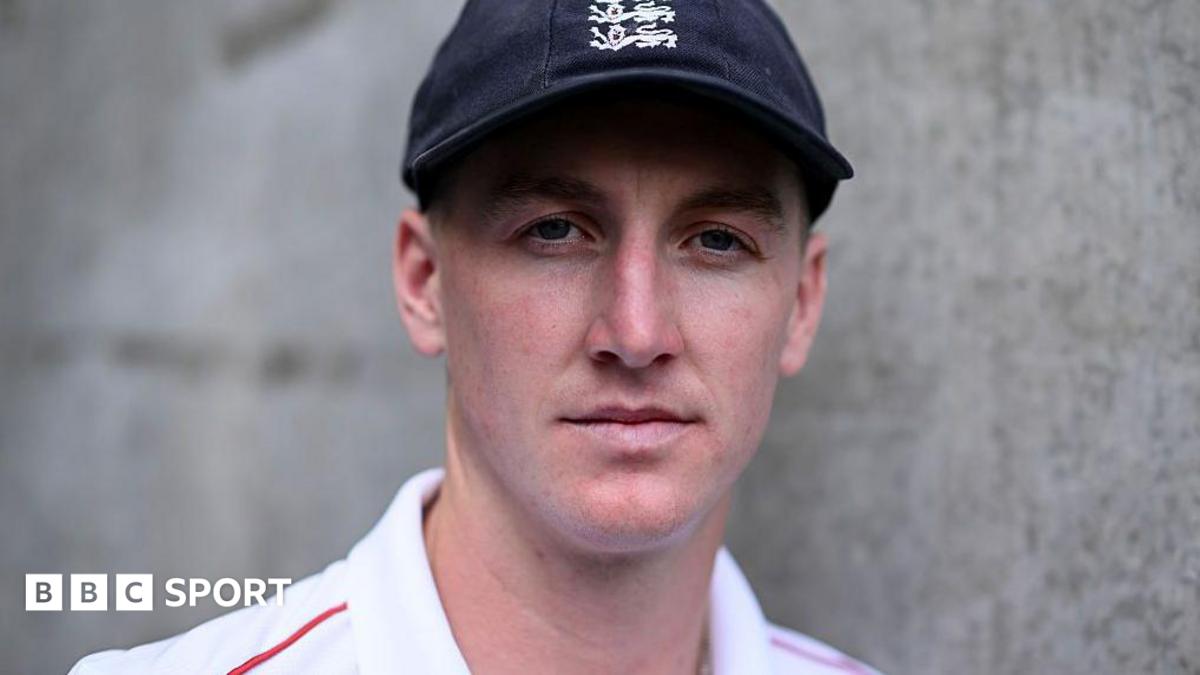
A brutal 49-ball display at Southampton did far more than set up England’s 119-run victory over Sri Lanka. Harry Brook’s unbeaten 114—an innings featuring 10 boundaries and six cleared ropes—lifted England to 254-4 and triggered an inevitable discussion regarding his standing among England's legendary stroke-makers. Watching from home, Ben Stokes offered an uncompromising assessment of the 27-year-old’s ability compared to Kevin Pietersen, who has joined the national team setup as a mentor leading into next year's 50-over World Cup. Stokes asserted that the genius of KP couldn't come close to what Harry Brook has talent-wise.
Unorthodox Craft on the South Coast
The contrast in upbringing is sharp—Pietersen learned his trade in Pietermaritzburg, South Africa, while Brook developed his game at Sedbergh—yet their tactical mindsets share a strikingly similar DNA. Pietersen created the switch hit, whereas Brook relies heavily on a tumbling scoop over his and the keeper's head, though he put that shot away during his Southampton blitz. What unites both batters is an exceptional ability to read length instantly, enabling them to pull, flat-bat, or cut spin bowling out of good length areas with authority.
Brook was just six years old when Pietersen made his famous 158 at The Oval to secure the 2005 Ashes, and 14 when Pietersen's international career ended after the 2013-14 series defeat in Australia. Reflecting early in his own career, Brook noted that he used to love watching Pietersen take the attack to bowlers and put them under pressure.
That shared aggressive instinct has occasionally drawn criticism, mirroring the period when Pietersen famously remarked after falling short of a century in 2009: That's the way I play... I got to 97 playing that way so it obviously wasn't meant to be.
Addressing critics who judge such high-risk execution harshly, Stokes posted on social media: "Is it really that hard to just sit back and admire these players for what they are, on the good days and the bad days, and stop berating them for doing things that we would never, ever, ever even think of doing because we simply aren't on their level to think that way?"
Two 27-Year-Old Records Side by Side
Evaluating both batters at the age of 27 highlights how closely matched their early international production is, while emphasizing distinct formatting strengths:
| Metric / Format | Harry Brook | Kevin Pietersen |
|---|---|---|
| Test Average | 53.08 (lacking a Test century in the past year; career best 317) | 49.55 (2 more Test centuries at same age) |
| ODI Average & 100s | 37.43 (3 centuries) | 47.87 (6 centuries) |
| T20 Centuries | 2 (including 114* vs SL) | 0 |
| T20 Leadership | 18 wins in past 20 matches | Stint lasted 5 months |
The Modern White-Ball Engine and Captaincy Edge
Since his move to number three in England's T20 lineup during the World Cup earlier this year, Brook's output has soared. He averages 95.20 with a strike-rate of 200.84, tallying 288 runs in the format since his last dismissal. Former England seamer Steven Finn argued that Brook's latest masterclass cemented himself as maybe the best all-format batter in the world,
placing him alongside Australia's Travis Head and India's Shubman Gill. Finn observed that despite going without a Test hundred over the past year, Brook still averages 42 in that time
while modulating tempo smoothly across formats.
Where Brook diverges cleanly from Pietersen is in leadership stability and red-ball accolades. Pietersen's tenure as England captain lasted just five months, whereas Brook has guided England to 18 wins in his past 20 T20 matches as skipper. Conversely, while Pietersen built a red-ball legacy that included four Ashes series wins—featuring 158 at Adelaide against Shane Warne and Glenn McGrath—Brook's top Ashes score remains 85, and he has yet to win the urn. With Pietersen now tasked with helping England defend or regain white-ball dominance ahead of next year's World Cup, Brook's brutal form provides England with a dominant middle-order force who continues to shape his own distinct era.
Sources
These sources formed the evidence pack for this article. Links open the original publisher; inclusion does not imply endorsement.
- bbc.co.uk original
- knihydobrovsky.cz original
- mirror.co.uk original