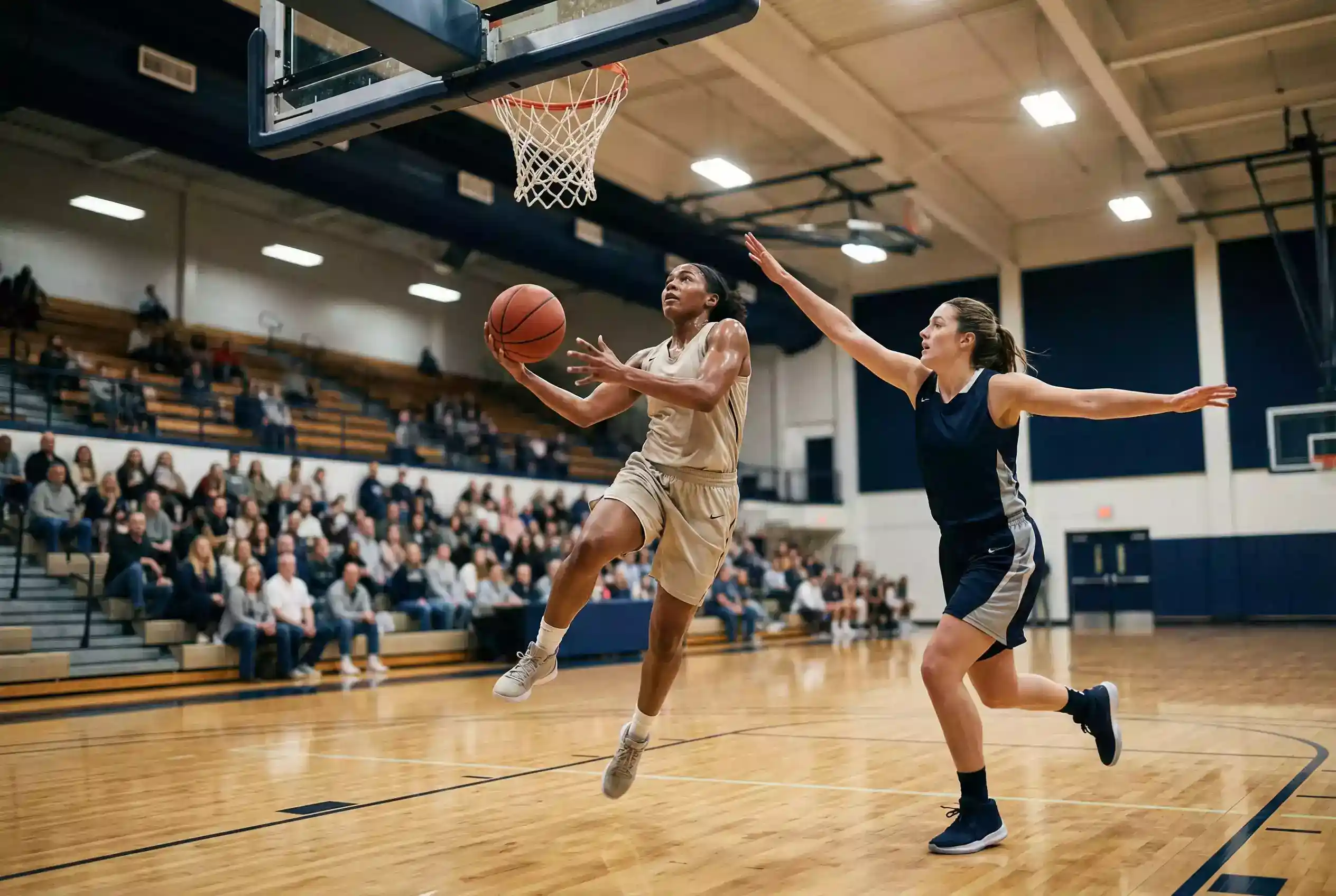
The atmosphere in Berlin was supposed to be a coronation. As the host nation for the 2026 FIBA Women’s Basketball World Cup, Germany entered the tournament with the weight of expectation and the distinct advantage of home soil. But the scoreboard at the opening tip-off told a much colder story. A 53-83 defeat at the hands of Spain has provided a jarring reality check for a German squad that arrived with ambitions of a podium finish.
For the host nation, the gap between pre-tournament hype and the clinical execution of a powerhouse like Spain was laid bare. Despite a roster boasting WNBA-level talent, the defensive lapses and offensive struggles against the Spanish press suggest that the path to a medal will be far more arduous than the German federation initially envisioned.
The Berlin Reality Check
The opening loss was more than just a statistical outlier; it was a tactical dismantling. Germany struggled to find any rhythm, looking outmatched by a Spanish side that seemingly thrived under the pressure of the Berlin crowd. For Leonie Fiebich, the top scorer for the DBB, the result was a bitter pill, yet her immediate post-game stance was one of survival rather than surrender.
"There is no time for frustration," Fiebich remarked, signaling an urgent need for the squad to recalibrate before their next outing.
The German roster, assembled by head coach Olaf Lange, features significant pedigree, including the star power of sisters Satou and Nyara Sabally, alongside captain Marie Gülich. However, the cohesion required to translate individual WNBA excellence into cohesive international success was noticeably absent in the face of Spain's structured aggression.
A Tale of Two Starts: Germany vs. The USA
While Germany struggled to find its footing, the global hierarchy was reaffirmed by the United States. In Group B, the American juggernaut delivered a masterclass in dominance, dismantling China 94-59. The performance was headlined by Caitlin Clark, who proved once again why she is the centerpiece of the world's most formidable lineup.
Clark’s statistical profile in the blowout was nothing short of elite, tallying 14 points and 11 assists. Beyond the numbers, her ability to navigate the unique physical matchups—including a notable encounter with the 2.20-meter Zhang Ziyu—underscored the tactical versatility the USA brings to the tournament. While Germany is fighting to stay relevant in their group, the Americans appear to be operating on a different plane of efficiency, reinforcing their status as the gold standard of women's basketball.
Tactical Disparity and the FIBA Standard
The discrepancy in scoring between the top contenders and the chasing pack highlights a fundamental aspect of international play. Under FIBA rules, the game often demands a higher level of defensive discipline and different tactical nuances compared to the faster-paced, higher-scoring environments seen in leagues like the WNBA. In top-tier international matchups, defensive intensity frequently suppresses total scores, making every possession a high-stakes battle.
The tournament's physical footprint is equally massive. Spread across two major Berlin venues—the 14,500-seat Berlin Arena (formerly the Uber Arena) and the historic 8,500-seat Max-Schmeling-Halle—the World Cup is designed to be a spectacle of scale. For the German team, the challenge is to ensure that the noise of the Berlin Arena becomes a weapon rather than a distraction.
Navigating the Road Ahead
Despite the opening stumble, Germany’s group was characterized by the DBB as "overall manageable." The tournament is a sprint, with 16 nations competing over ten days across 36 matches. For Germany to salvage their home campaign, they must bridge the gap between individual talent and collective tactical execution. The margin for error in this format is razor-thin; a single loss can shift the momentum of an entire group stage.
For fans looking to follow the fallout, the broadcasting landscape is surprisingly accessible. While the tournament is being captured by various partners, a free account on Joyn provides a complete livestream of all 36 games, including those not featuring the German national team. ProSieben and ProSieben MAXX will provide traditional free-TV coverage for key German matches, including selected quarterfinals, semifinals, and the final on September 13.
Evidence-Led Forecast: The German Redemption Arc
Likely Tactical Pattern: Expect Germany to tighten their defensive rotations and attempt to increase the tempo to avoid the stagnation seen against Spain. If they cannot find a way to penetrate the paint, they will be forced to rely heavily on high-volume perimeter shooting from Fiebich and the Sabally sisters.
Decisive Matchup: The efficiency of the German transition game against structured zone defenses. If Germany cannot move the ball effectively in the half-court, they will remain vulnerable to the high-pressure tactics favored by European powerhouses.
Strongest Counter-Case: A continued lack of secondary scoring. If the offensive burden remains almost exclusively on a few key players, opponents will continue to double-team effectively, rendering Germany's star power obsolete.
The Pivot Point: A victory in their next group stage game will be the difference between a fight for the knockout rounds and an early flight home. Success depends on whether Olaf Lange can implement a more disciplined defensive shell before the pressure of the knockout stages becomes insurmountable.
Sources
These sources formed the evidence pack for this article. Links open the original publisher; inclusion does not imply endorsement.
- tv.seznam.cz original
- basketballmannschaften.com original
- bitblokes.de original
- basketball-world.news original

