Cricket Australia has finally put a shape around its long-awaited independent forum into the 2018 ball-tampering scandal, and the scope is wider than many expected. The review will not stop at Cape Town. It will reach back to include Australia's 2017-18 Ashes series against England, which the home side won 4-0, opening a window into ball-management practices that England players have questioned for years.
The forum will run for six weeks and will be overseen by Senior Counsel Fiona McLeod AO SC. It is open to players, coaches and support staff from the 2018 South Africa tour, as well as Cricket Australia executives and directors from that era. Submissions can be written, delivered in person or remotely, or provided through another mutually agreed format, and supporting documents are accepted.
Participation is voluntary, and no adverse inference will be drawn from anyone's decision to stay away. Individual accounts will remain confidential unless a participant chooses otherwise. McLeod will not make adverse findings against individuals, will not determine personal responsibility, and will not recommend retrospective punishment or legal action. Instead, she will prepare a report outlining principal themes, the number and range of participants, and recommendations for future improvements. Cricket Australia's board must publish the full report within 30 days of receiving it, alongside a public response.
This is an opportunity to provide their accounts in a safe environment and to provide the CA Board with relevant information, including about the events of that tour and resultant investigation.David Boon, Cricket Australia chairman
Boon added that player welfare remains the board's main priority and acknowledged the enormous toll that renewed focus on the 2018 tour has taken on those involved eight years on.
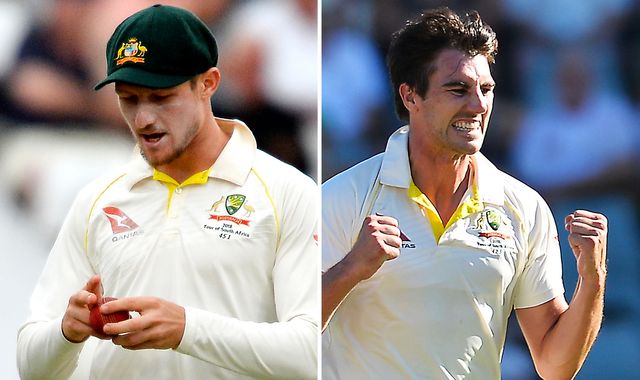
The expansion follows public allegations from several current and former players. Usman Khawaja and Cameron Bancroft have discussed recollections of attempts to manipulate the quarter seam during the 2017-18 Ashes. Former England internationals Alastair Cook, Stuart Broad and Chris Woakes have raised questions about whether David Warner used other methods to influence the condition of the ball. In his 2019 autobiography, Cook recalled an alleged conversation with Warner in the SCG changing rooms after the series, in which Warner described using substances attached to strapping on his hand to accelerate the deterioration of the ball during a first-class match.
The timing means the findings are expected in late January or early February 2027, while Australia's Test team is scheduled to be touring India. That export of the process to a foreign tour adds a layer of logistical complexity, though remote submissions are permitted.
What the forum will examine is defined tightly in its terms of reference: ball-management practices during the 2017-18 season, all four Tests of the 2018 South Africa tour, the events of March 24, 2018, and the nature and scope of Cricket Australia's subsequent investigation. What it will not examine is just as important. Ball-management before the 2017-18 Ashes is excluded, as is anything after the South Africa tour. The review will not revisit previously imposed sanctions, and no retrospective penalties will be applied.
That boundary has already provoked dissent. Chadd Sayers, the former Australia fast bowler, told SEN he is uncertain whether to take part, asking what the point is if certain bits are cut out of the final report. Khawaja, before the terms were announced, advocated for all individual accounts to be made public. Bancroft, who has already published a detailed 4,000-word account of the South Africa tour, has confirmed his willingness to participate.
The political divide within Australian cricket is stark. Pat Cummins, the Test captain, has strongly rejected Khawaja's allegation that the whole squad knew about the sandpaper plot, calling it "utter nonsense." Cummins has backed the forum completely and said he will participate. Khawaja has also indicated he will make a submission. Warner and Bancroft have supported Khawaja's claims after maintaining silence since their bans were imposed.
The bans remain the fixed point in this story. Bancroft received nine months. Steve Smith and David Warner, then captain and vice-captain, were banned for 12 months. The forum cannot revisit those penalties, and no one participating should expect sanctions as a result of what they say. That guarantee may encourage candour, but it also means the process cannot deliver the kind of reckoning some critics want.
I support the forum 100%. I will be there. All of the players and staff I have spoken with are very keen to go and to have their say. There will be a lot of difficult conversations, but that is what's needed.Pat Cummins, Australia Test captain
Analysis suggests the forum's greatest value may be thematic rather than adjudicative. By collecting accounts without attribution, McLeod can identify patterns in how ball-management was discussed, tolerated or resisted across the 2017-18 season and the South Africa tour, without assigning blame to named individuals. The risk is that confidentiality produces a report that satisfies Cricket Australia's transparency commitment while leaving the public's appetite for named accountability unmet.
The unresolved tension between Khawaja's collective-responsibility narrative and Cummins's rejection of it is unlikely to be settled by a themed report with no names attached. If McLeod's findings echo Khawaja's claim that knowledge was widespread, Cricket Australia will face pressure to explain why only three players were punished. If the themes suggest a rogue plot confined to a few, Cummins's position is strengthened. Either way, the forum's real test begins when the report is published, not when the six-week window closes.
Sources
These sources formed the evidence pack for this article. Links open the original publisher; inclusion does not imply endorsement.
- sports.yahoo.com original
- geosuper.tv original
- cricketwinner.com original
- mkfm.com original