The sandpaper never really went away. It just waited for someone to pick it up again.
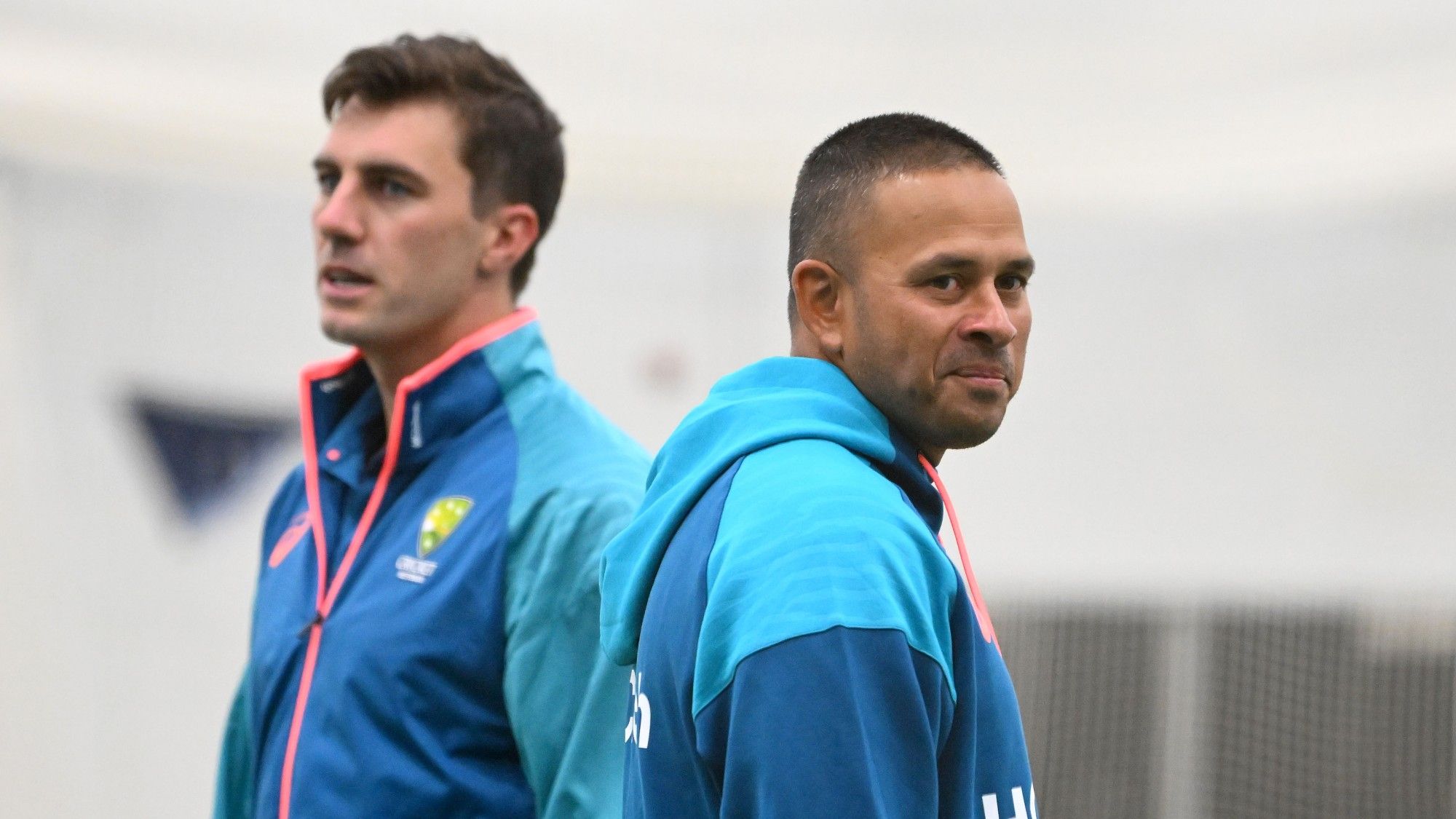
Eight years after Cameron Bancroft stuffed yellow granules down his trousers at Newlands, the scandal that cost Steve Smith and David Warner a year of their careers and Darren Lehmann his job has erupted into a three-way civil war. Usman Khawaja's autobiography Sabr alleged the entire 2018 touring party knew sandpaper was being used on the field. Pat Cummins, the current Test captain and Khawaja's teammate of 15 years, devoted a 70-minute press conference to calling those claims "100 per cent wrong" and "complete and utter nonsense." David Warner, banned as the ringleader, responded by accusing Cricket Australia of a "cover-up" and saying Cummins had "thrown Uzzy under the bus." Cameron Bancroft, the man who actually held the sandpaper, published a 4,000-word statement saying he'd been advised to "minimise the damage on the team" and that bowling coach David Saker had urged him to "do more with the sandpaper."
Cricket Australia's response? An "independent forum" for players and staff to share recollections confidentially — but a firm refusal to reopen the formal investigation. Chief executive Todd Greenberg ruled it out within days. The governing body says all players were given the opportunity to speak in 2018 and have had eight years to come forward since.
The Fault Lines
The dispute now runs along three distinct fractures. First, knowledge: Khawaja and Bancroft say the bowlers knew. Cummins, Mitchell Starc, Josh Hazlewood and Nathan Lyon have maintained since 2018 — and reaffirmed in a 2021 joint statement — that they did not. Warner argues the original investigation never interviewed Hazlewood, Starc or Lyon, a claim Cricket Australia has not directly addressed in its public statements.
Second, agency: Bancroft's statement alleges he "did not give a complete and truthful account" and "withheld important details" in the 2018 probe. He says he was pulled into "frantic conversations" about damage control after being caught. He also says the only person who objected to the sandpaper use was media manager Kate Hutchinson.

Third, culture: Cummins acknowledged the 2018 team had "a win-at-all-costs mentality, had an ugly underbelly, and there was too many silos within the team." He described finding "parts that I didn't really think was OK" when he returned from injury in 2017 — abrasive behaviour toward umpires and opposition, "a bit of an arrogance, and a bit of an ugliness." Khawaja, meanwhile, wrote that he believed he was passed over for the captaincy because he was not white. Cummins called that "the most serious" allegation in the book, saying there was "no evidence" and he "couldn't disagree with that statement any more."
The Training-Ground Context Cummins Offered
In a detail that complicates the moral binary, Cummins explained why sandpaper was in the changing room at all. Batters use it to rough up their bats. Bowlers use it in training to scratch balls on concrete, or with Stanley knives, to produce reverse swing for batters to practice against. "We've scratched balls on concrete, I've seen someone use a Stanley knife, I've seen sandpaper used. So, all the methods are very normal around training," he said. The leap, he argued, was taking it onto the field — but "perhaps not as big a leap as some people may think."
This matters. It means the implements of the crime were legitimate training tools. The question becomes not how the sandpaper got there, but who decided to cross the line from net session to Test match.
What Bancroft Added
Bancroft's statement, published Wednesday on The West Australian website, is the most significant new evidence since 2018. He said sandpaper was not used in the first Test at Durban. It was used in the second Test at Port Elizabeth. He recalled discussing it with Cummins, Starc, Hazlewood, Mitchell Marsh and wicketkeeper Tim Paine — "all gave him feedback on the ball's behaviour." He said bowling coach David Saker urged him "do more with the sandpaper." He said media manager Kate Hutchinson was the lone objector. And he said Cummins' press conference was "the final straw" that made him feel "angry, betrayed and alone."
Cummins' management responded with a statement doubling down: no knowledge, no involvement.
The Cover-Up Charge
Warner's Instagram broadside cut deepest at Cricket Australia's process. "As far as I am aware, CA did not interview Josh Hazlewood, Mitchell Starc or Nathan Lyon in their 2018 investigation. If that's correct, then how can CA push the idea that the bowlers didn't know?" he wrote. "It appears Cricket Australia had decided who they wanted to blame from the very beginning and ran a shoddy investigation. Now they want to maintain the false narrative that the bowlers had no idea. That stinks of a cover-up."
Cricket Australia's spokesperson said only that "all players were given the opportunity to speak at the time of the initial investigation and have had the ability to come forward with new evidence in the eight years since." The governing body has not confirmed or denied which players were formally interviewed.
Why It Won't Die
David Rowe, emeritus professor of Cultural Research at Western Sydney University, argues the scandal persists because Australia tied its national identity to cricket's ethics. Prime Minister John Howard once called the captaincy "the absolute pinnacle of sporting achievement, and really, the pinnacle of human achievement." When the team cheated, Rowe says, "they let the whole nation down" — and the scandal "draws you in by implication if you're Australian, even if you don't know anything about cricket."
Mike Atherton, former England captain and The Times chief cricket correspondent, said there was "obviously" no "better time" to be English than "when Australian cricket is tearing itself apart." Daily Mail columnist Oliver Holt called for Cummins' resignation, writing he had "torched his own reputation over sandpapergate." Former South African and English cricketer Matt Prior told The Cricketer he believes the bowlers knew: "There is just no way that a conversation wouldn't have been had in any of the dressing rooms that I've played in." Former India spinner Murali Kartik agreed: "When you're trying to do something for the sake of the bowlers, wouldn't you tell the bowlers? How can anyone believe that? Are we in kindergarten to accept that sort of thing?"
The Ashes Soundtrack
Australia tours England for the Ashes next summer. The BBC noted the "soundtrack of the summer" promises to be home fans chanting: "Same old Aussies, always cheating." Khawaja's allegations, "whether true or not, promise to taint an entire generation of Australian cricketers," The Week observed.
Cummins said he received legal advice that some of Khawaja's claims were "probably defamatory" but would not sue: "You've got to move on. It's been eight years, I keep saying we're moving on, so you've got to draw a line at some point."
The line, though, keeps moving. Bancroft says he'll attend Cricket Australia's forum. Warner keeps posting. Khawaja's book sells. And the 2018 investigation — three days, three bans, one coach resigned — remains the only official account. Unless the forum produces a collective statement, or someone breaks ranks further, Australian cricket will carry two contradictory truths into the Ashes: the captain's word, and the sandpaper holder's.
Sources
These sources formed the evidence pack for this article. Links open the original publisher; inclusion does not imply endorsement.
- sports.yahoo.com original
- sbs.com.au original
- theweek.com original
- newscord.org original