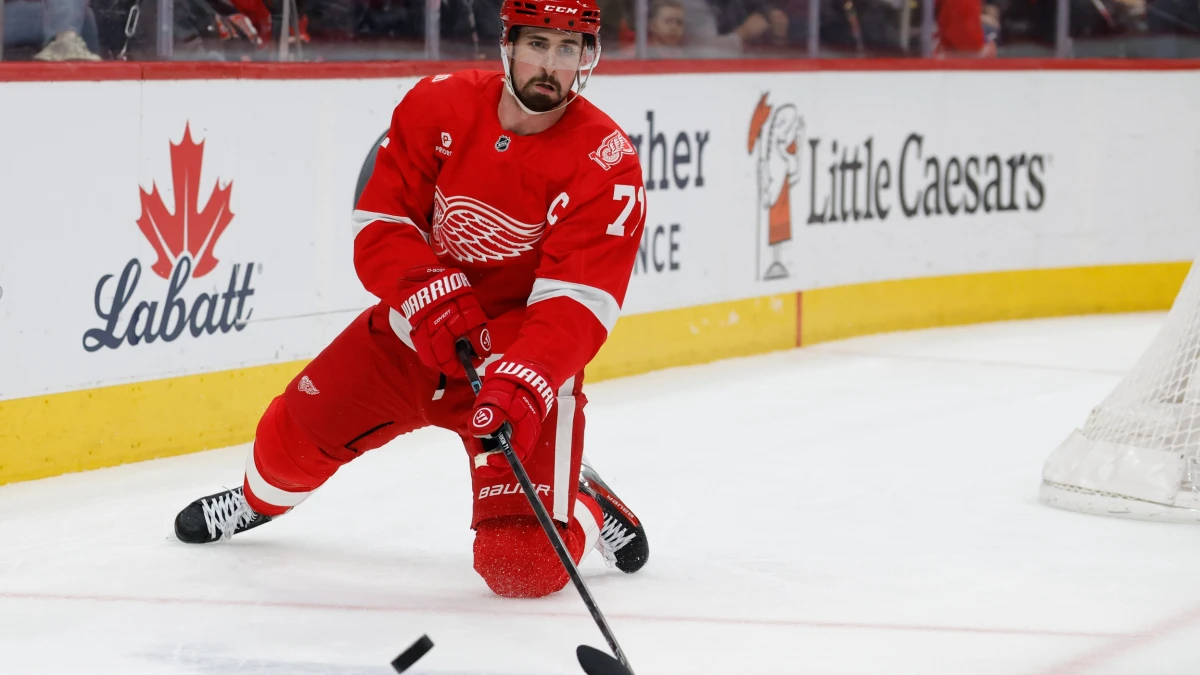
The offer sheet is dead. Anaheim matched Philadelphia's five-year, $90-million bid for Leo Carlsson, kept its 21-year-old center, and the hockey world moved on within a news cycle. But the Flyers' willingness to commit an $18-million annual cap hit — and to put four first-round picks on the table — did something more durable than any single signing. It set the price ceiling for the next conversation, and the next conversation is Dylan Larkin.
Three weeks later, the Larkin market is stuck. Not because the interest isn't there, but because the math doesn't reconcile, and because the people who can actually finish a trade are the people who haven't been put on his list.
The 'second-line center' frame and what it really means
Jeff Marek, on The Sheet on July 10, put the central tension of the Larkin saga in plain language. One of the issues here is, a lot of the teams are looking at Larkin and saying, yeah he's a 1st line center on the Red Wings, but...this guy on a good team is a 2nd line center and that is the price that we want to pay.
That framing is doing real work. Larkin produced 34 goals and 67 points in 74 games last season, with 14 power-play goals and 9 game-winners. Over an 82-game pace, that's a 38-goal, 74-point center with top-of-the-lineup usage. But on a contender, where he's no longer the offensive engine, the projection softens. Buyers want to pay for the second-line version, because that's the version they need, and that's the version they can afford to add without gutting the rest of their roster.
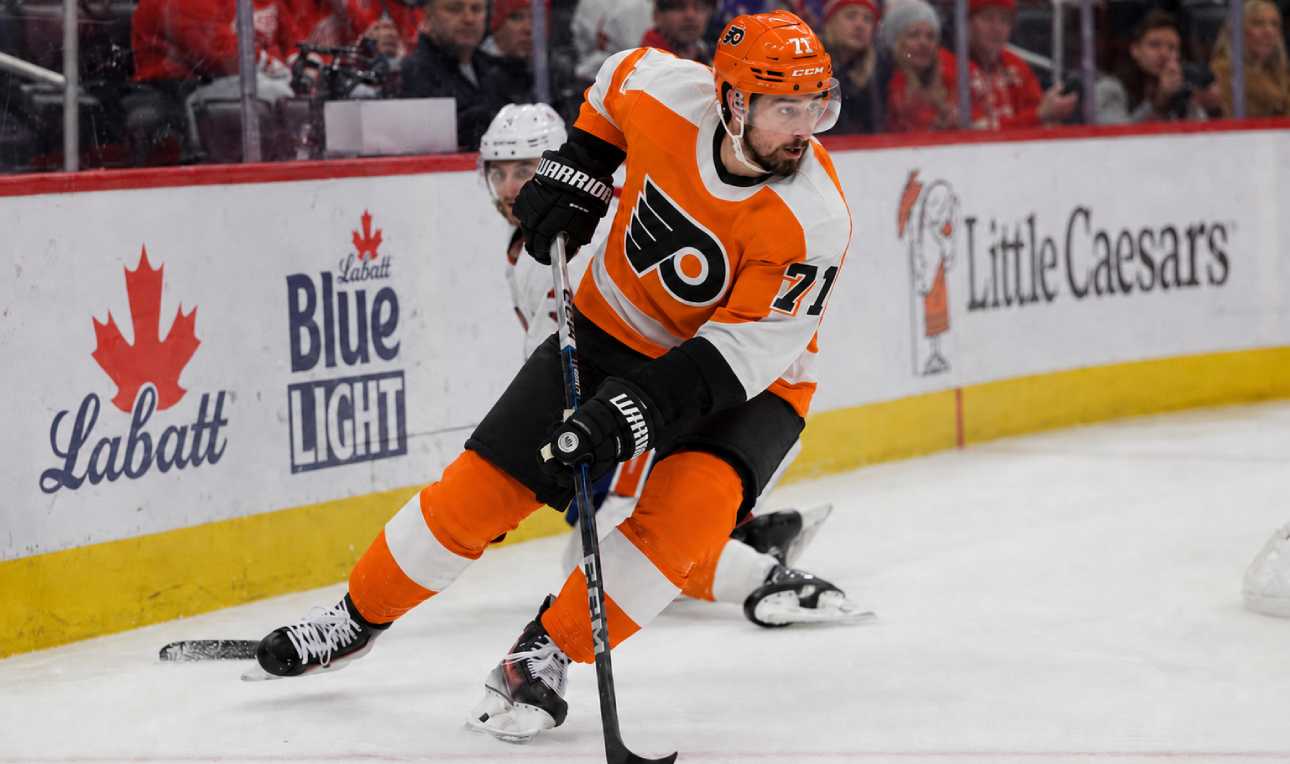
Detroit's problem is that the Red Wings can't replace what Larkin actually does for them. He plays the heavy matchups, runs the first power-play unit, and drives Todd McLellan's top six. Detroit finished 41-31-10, good for 92 points, but closed 2-6-2 over its final 10 games, a soft finish that underscored how thin the margin between a stalled rebuild and forward motion really is. Moving the captain without an established replacement risks pushing the roster backward, not opening a cleaner path forward.
Why Yzerman isn't picking up the phone
Steve Yzerman has public standing on his side. The captain controls the contract — five years remaining at an $8.7-million cap hit through 2030-31 — and the captain is the one asking out. But the leverage is more balanced than it looks.
Detroit's reported interest in Matt Boldy tells you everything about the asking price. The Red Wings want a young, established NHL forward with top-line upside, not a bundle of futures. From a market with Philadelphia's depth, that means the realistic centerpiece is Owen Tippett, the winger with a $6.2-million cap hit through 2031-32. Tippett is controllable, can score, and slots into Detroit's top six immediately. He is not, however, a center.
That is the knot. Yzerman cannot accept a winger-led return and pretend the middle of his ice is fixed. The compensation has to reflect both production and replacement value, which is why Detroit is reportedly willing to sit and wait. A discounted package isn't just bad business — it makes the next several seasons significantly worse, and Yzerman doesn't need a trade to validate his plan.
The approved-list problem
This is where the sources part ways, and the disagreement is worth taking seriously. According to reporting on nhltraderumor.com, Larkin's most recently known approved destinations are the Minnesota Wild, Florida Panthers and Vegas Golden Knights. Stadium Rant's update on July 19 added the Dallas Stars to that group, a meaningful shift if accurate, because Dallas expands the bidding field and changes the leverage math for everyone involved.
Treat that list as a moving target. What is not moving is the basic fact: Larkin controls the process through a full no-movement clause, and Philadelphia is not currently on it. Briere can be as aggressive as he wants on the cap and the prospect side, but he cannot complete a trade for a player who hasn't approved the destination. The Carlsson attempt proved the Flyers will spend historic money; it did not prove that the players they want will accept the address.
The most interesting wrinkle is Minnesota. The Wild reportedly passed on Vincent Trocheck because they believed they had a real shot at Larkin, a confidence that tells you both how much they value him and how much they're willing to leave on the table elsewhere to keep the door open.
The McDavid long game, and why it isn't a distraction
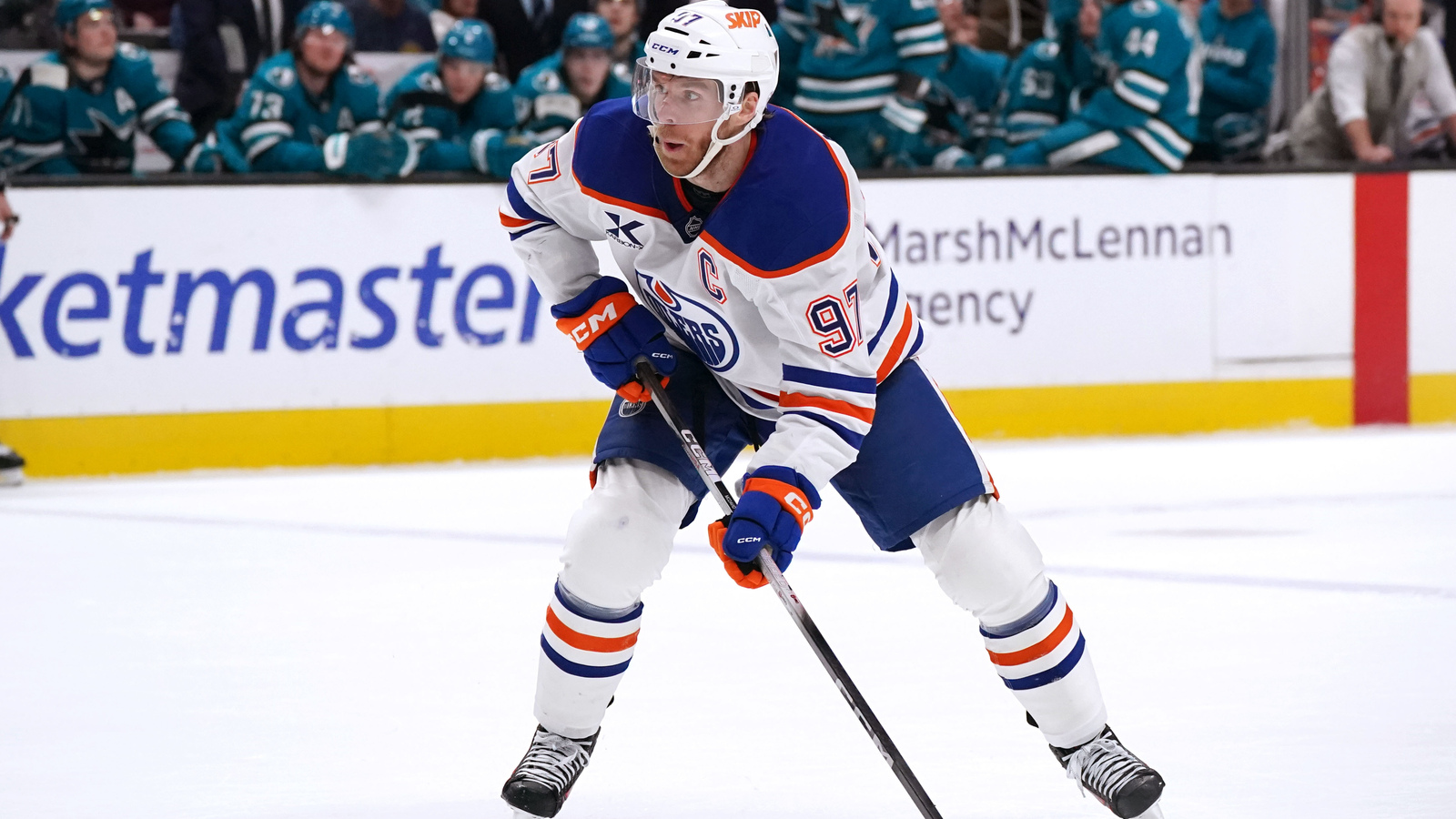
Former NHLer Todd Fedoruk's comments — that there are rumors Philadelphia is a place McDavid would want to go — are the kind of speculation that sounds louder than it is, and the kind that still matters in a market where cap sheets and timing drive everything.
McDavid is 29 and entering the first year of a two-year, $25-million extension. He is coming off an Art Ross Trophy-winning season, 138 points in 82 games, 48 goals and 90 assists. Edmonton lost in the first round, again, and the contract was structured short for exactly the reasons everyone is now discussing: to give McDavid an escape ramp if the window closed without a Cup.
Bleacher Report's Lyle Fitzsimmons argued Philadelphia has the wallet, the market and the stockpile of talent to be a real bidder if McDavid ever hits the market, even while noting the Flyers would have to surrender pieces — Matvei Michkov, Trevor Zegras, Porter Martone, the teenagers Rick Tocchet just coached into the playoffs for the first time in six years — that built the rise. That cost is the conversation. But the conversation isn't happening yet, and any front office that mistakes the McDavid long game for the Larkin short game is going to misallocate its summer.
What the rest of the rumor board looks like
The Larkin standoff has crowded out a board that is genuinely busy. Seattle's Shane Wright has been on the trade wire for more than a month with very little new information beyond a stated preference for Vancouver. The New York Rangers, already active this offseason, are still hunting forward depth, with Patrick Laine, David Perron, Adam Henrique and Reilly Smith floated as targets.
None of those have the gravitational pull of a Larkin or a McDavid. But they are the kind of depth moves that decide October and, eventually, April.
The cap math, for the curious
For a Philadelphia roster that projects to roughly $29.57 million in cap space before restricted free agents are signed, the Larkin math is workable in a way the Carlsson math never was. Note: figures below are estimates from nhltraderumor.com and do not include RFA contracts or roster adjustments beyond the named pieces.
| Trade scenario | Estimated remaining cap space |
|---|---|
| Larkin acquired without salary going to Detroit | $20.87 million |
| Larkin acquired with Tippett traded to Detroit | $27.07 million |
| Larkin acquired with Konecny traded to Detroit | $29.62 million |
The one-for-one Konecny scenario is roughly cap-neutral. The Tippett scenario frees up a meaningful amount. The straight-acquire scenario is the cleanest, but it also gives Detroit the least to work with, which is the structural problem in any Philadelphia offer.
The judgment, labeled as analysis
Detroit should hold. Larkin wants out, but he wants out to a list that can't yet meet Yzerman's price, and the Red Wings are not under roster pressure to dump a 30-year-old center coming off a 67-point season. The market's preference for valuing Larkin as a second-line piece is rational from a buyer's standpoint and economically wrong from a seller's. That tension doesn't resolve until a fourth team gets added to the approved list, or until one of the existing bidders blinks first.
Philadelphia's best move is exactly what Briere appears to be doing: stay loud, stay visible, and keep building the case that the Flyers are a destination, not just a buyer. The Carlsson offer sheet didn't get Carlsson, but it changed the temperature of every conversation Larkin's camp is having.
And the McDavid conversation — the one that is technically rumor and structurally inevitable — runs in the background of all of it, because any team that lands a 30-year-old Larkin is, by definition, not the team that lands a 29-year-old McDavid if Edmonton ever makes that call. The Flyers can chase both. They cannot, and should not, confuse one for the other.
Sources
These sources formed the evidence pack for this article. Links open the original publisher; inclusion does not imply endorsement.
- markerzone.com original
- Bill Scott original
- Charles North original
- yardbarker.com original
- sportingnews.com original


