The Steelers' 16-10 win over the Saints at Stade de France was supposed to be the story. Aaron Rodgers threw a touchdown to the massive Darnell Washington, Jaylen Warren rushed for 101 yards, and Payton Wilson's red-zone interception sealed Pittsburgh's third straight victory. But the quarterback's postgame news conference took a sharp turn toward labor history when he revealed just how close the NFL came to a radically different international model—and why it died.
"There was talk about doing an international week where you had games in 16 different places and you just added an extra bye week, so you played 16 regular season, you have two bye weeks, one of those weeks would have been an international week," Rodgers said Sunday, per Heavy.com. "I thought it would have been phenomenal for the game. Now that the owners want to push for 17 games for the extra revenue, and they care so much about player safety. But it would have been nice."
The sarcasm was unmistakable. Rodgers, now the only quarterback in NFL history to play international games in three different countries across three consecutive seasons—London in 2024, Dublin in 2025, Paris in 2026—has become the league's most credentialed critic of its own global strategy. His resume as an international traveler is accidental: 17 seasons in Green Bay without a single overseas game, then three straight years abroad with the Jets and Steelers.
The 2020 CBA negotiations featured a proposal—Rodgers said it came from the NFLPA—to consolidate all international games into a single week. Thirty-two teams, 16 host cities spanning North America, South America, Europe, and even the Middle East. Rodgers rattled off Dubai, France, Spain, Ireland, and Brazil as viable locations. Every team would receive two bye weeks, one falling after the international slate. Players would arrive Sunday or Monday, not Friday, allowing genuine cultural immersion, community events, and outreach.
"I wish there was a mandate, though, from the league, and they would have to open up their pocketbooks, too, which maybe they're a little tight on money and stuff, but I think there's a mandate every team coming over Sunday or Monday to really enjoy the culture and the place you're going," Rodgers said. "You can do events in those cities and outreach stuff and community work. But they won't because they're a little tight."
The Steelers landed in Paris on Friday morning, roughly 48 hours before kickoff—the exact compressed timeline Rodgers has criticized since last year's Ireland trip. The team enjoyed Friday but stayed near the hotel Saturday as protests over school funding and living costs erupted across Paris, with boarded storefronts and heavy police presence visible on city streets. Coach Mike McCarthy noted players and families "really enjoyed" their brief window.

Why the league rejected the international week is hardly mysterious. The current model creates a coveted 9:30 a.m. ET broadcast window for European games—a distinct television inventory the NFL can sell separately to networks or streaming services. Concentrating all 16 games into one week would collapse that asset. A universal bye week mid-season would also disrupt the league's carefully engineered calendar rhythm.
"If the league's primary goal was to grow the game, the NFL would likely follow a lot, or all, of Rodgers's proposal," observed Heavy.com's Dave Holcomb. "But that's not the league's goal. The NFL wants to grow the game while maximize profits along the way."
Rodgers understands the calculus. "The reach of the league is fantastic, and I think I always wanted to be a part of it," he told CBS Sports postgame. "It'd be awesome to see them, you know, have an international week because I think it's great for the game and the expansion of the game."
His own experience underscores the gap between rhetoric and reality. In Paris, he completed 19 of 30 passes for 212 yards, engineered a 51-yard strike to DK Metcalf that French broadcasters called "quel caviar d'Aaron Rodgers," and scrambled for a crucial eight-yard gain on third-and-six late in the fourth quarter—refusing to slide because "sometimes you've got to suck it up and make a play for your guys." The 42-year-old called the French national anthem "gorgeous" but complained the stadium scoreboard made finding the play clock confusing amid a sea of numbers.
The Peaky Blinders incident only highlighted the cultural disconnect. The Steelers' social media team posted photos of Rodgers and teammates in flat caps and tailored suits with a Peaky Blinders caption—never mind the show is set in Birmingham, England. The internet roasted them: "Go to France. Dress up like British TV show. Peaky Blunders." Rodgers "should've pulled up dressed like Napoleon."
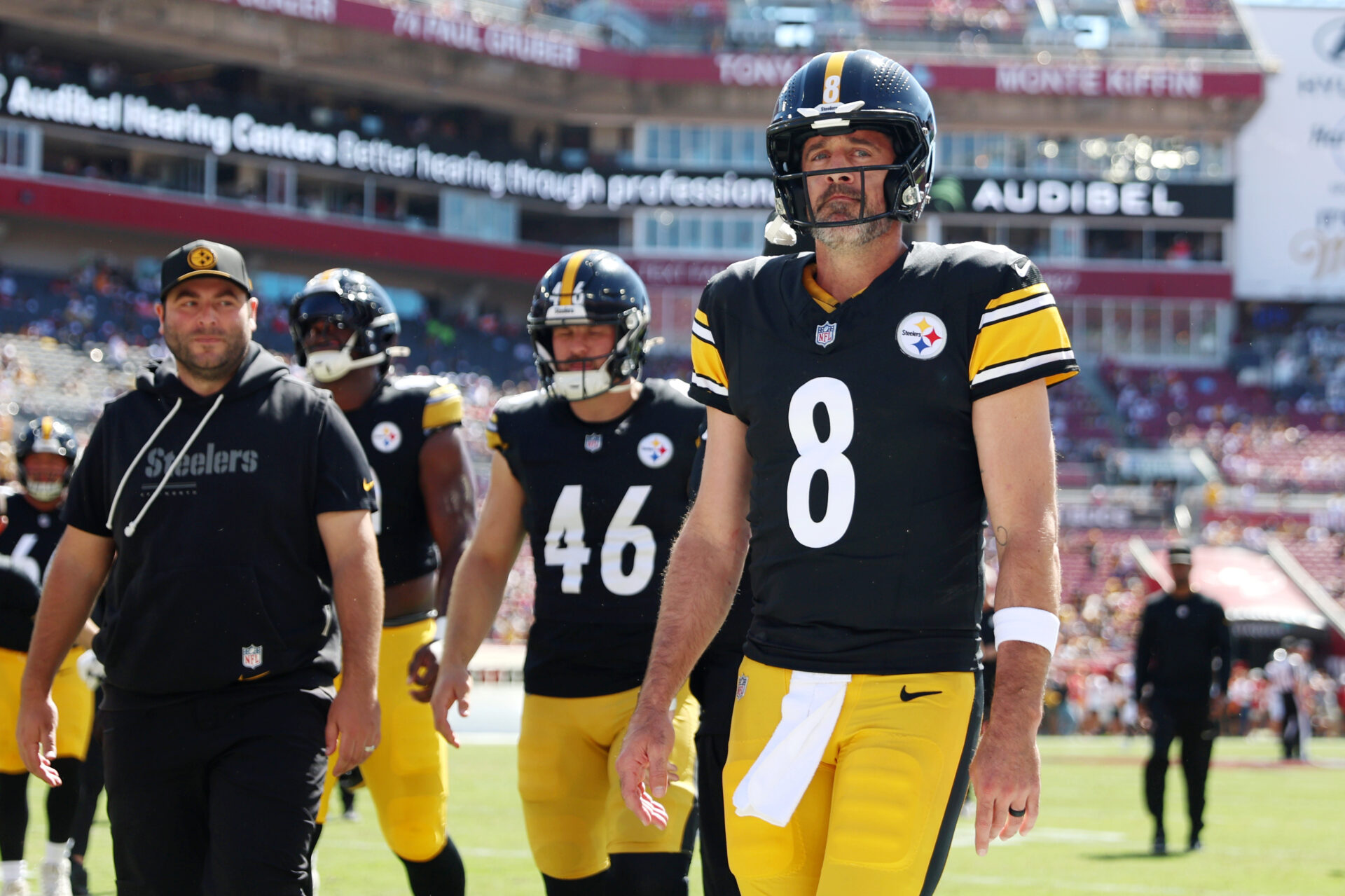
It was a small, silly moment. But it crystallized Rodgers' deeper point: the NFL parachutes teams into foreign cities for 48-hour business trips, then wonders why the cultural exchange feels performative. The league had a blueprint for something richer in 2020. Owners chose the 17th game instead. The extra revenue was real; the international week remained a "what if."
Rodgers, at 42, has now lived both realities. He's the league's most traveled quarterback, its most vocal international advocate, and its sharpest internal critic. The Steelers fly home 5-2, headed for a Cleveland showdown before their bye week. Rodgers will keep showing up, keep playing well, keep calling for a mandate that will never come. The owners aren't tight on money. They're tight on imagination.
Sources
These sources formed the evidence pack for this article. Links open the original publisher; inclusion does not imply endorsement.
- heavy.com original
- chicagotribune.com original
- thebiglead.com original
- cbssports.com original