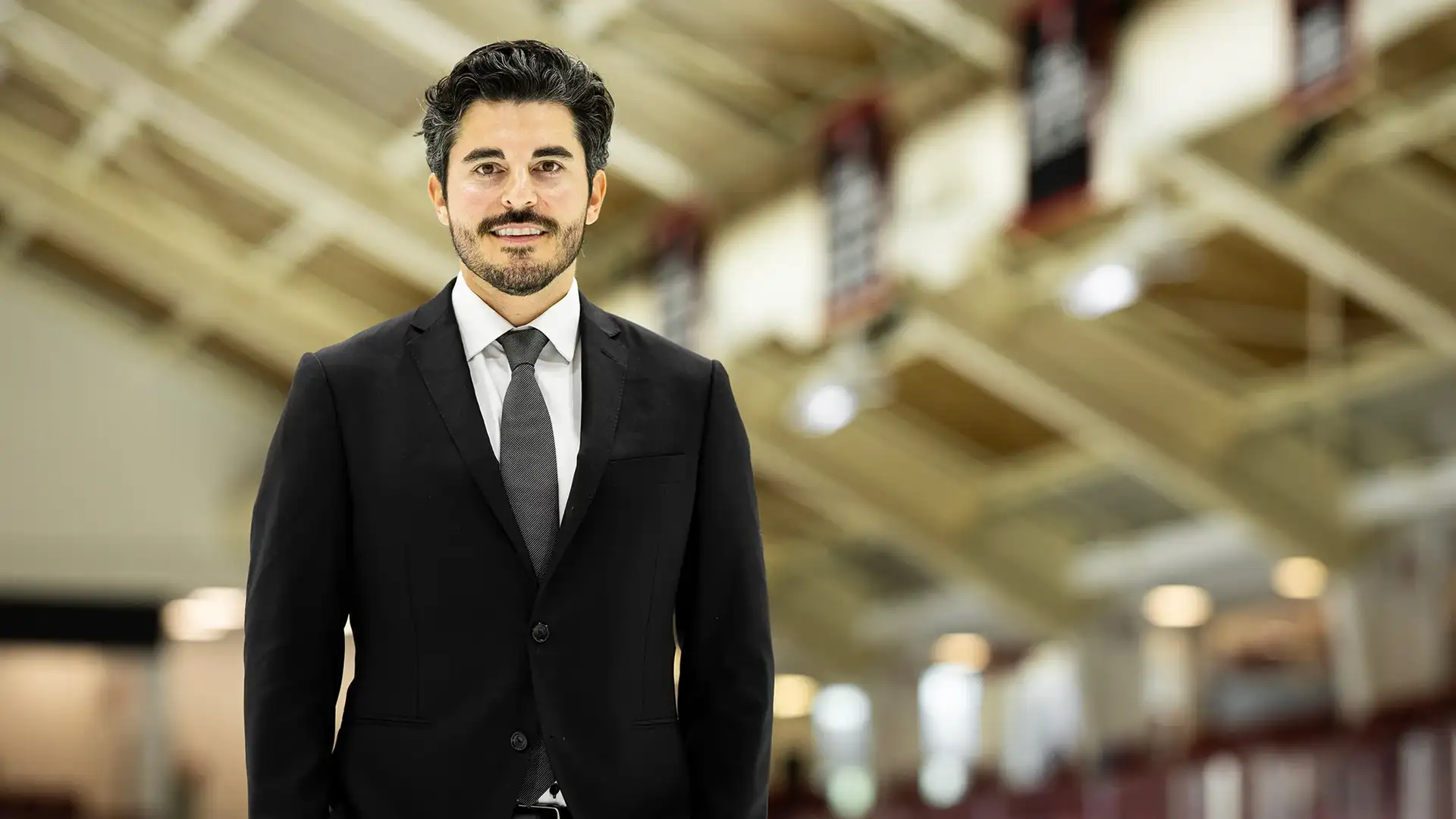
Coaching continuity in collegiate hockey is a fragile commodity, built as much on upward mobility as it is on tactical consistency. When the Harvard men's hockey team initiated a two-month search following the departure of longtime head coach Ted Donato ’91, the institutional pivot pointed straight toward Ann Arbor. Rob Rassey, who had spent a single season as an assistant before stepping up to the associate head coach role at the University of Michigan in 2022, was named the new head coach of the Crimson.
Rassey's exit from the Wolverines' bench creates a distinct operational void. During his tenure under the Michigan umbrella, Nichols Family Director of Athletics Erin McDermott lauded his player-first philosophy, describing him as a true teacher who prioritizes trust as the unselfish foundation of a high-standard culture. For Michigan, losing an associate head coach with deep ties to elite talent development—having previously helped coach future NHL standouts like Alex Kerfoot and John Marino of the Utah Mammoth, Adam Fox of the New York Rangers, and Jimmy Vesey of the Nashville Predators—forces an immediate recalibration of their staff dynamics.
The timing of Rassey’s transition coincides with an unprecedented era of administrative and regulatory upheaval across college sports. As programs navigate expanded athlete compensation following the NCAA’s landmark antitrust settlement in June 2025, alongside the relentless churn of the transfer portal and evolving recruiting rules, stability on the bench has never been at a higher premium. While larger athletic budgets now permit direct revenue-sharing alongside name, image, and likeness opportunities, Rassey emphasized that the fundamental architecture of building a winning locker room remains tethered to interpersonal connection.
Our goal as a staff will be to help each player maximize their potential as hockey players and as people, and one of those is not more important than the other.
Rob RasseyFor Michigan supporters and analysts tracking the program's tactical and developmental pipeline, the departure demands a close look at how the remaining staff absorbs Rassey's responsibilities. Rassey’s footprint in Ann Arbor was defined by a steady hand in player evaluation and culture-building—elements he plans to install immediately in Cambridge as he returns to a campus where he previously helped secure four NCAA Tournament appearances, two ECAC Championship titles, and a Beanpot Championship.
As the Wolverines look to maintain their competitive edge within the collegiate landscape, replacing the structural space left by an associate head coach of Rassey's caliber remains one of the more critical subplots of the current offseason. The capacity of Michigan's remaining staff to seamlessly absorb those recruiting and player-development duties will heavily dictate whether the transition causes any noticeable turbulence on the ice.
Sources
These sources formed the evidence pack for this article. Links open the original publisher; inclusion does not imply endorsement.
- harvardmagazine.com original
- learnhockey.com original
- friars.com original
- nhl.com original


